All Articles
Members can login to view the full articles
Seasonal Nectar Gaps in Farmland Landscapes
Paper Review: Seasonal Nectar Gaps in Farmland Landscapes Timberlake et al. (2019) Phenology of farmland floral resources reveals seasonal gaps in nectar availability for bumblebees This paper is a straightforward observational study examining the seasonal availability of nectar sugars across farmland habitats in North Somerset. Although the work focuses on bumblebees, many of the findings will be immediately familiar to beekeepers, particularly the identification of recurring nectar shortages through the season. The researchers measured floral sugar production across four farms and compared this with the estimated sugar requirements of local bumblebee populations. The resulting analysis revealed several distinct periods ...
Varroa Resistance: It Comes from the Queen
For those involved in bee improvement and breeding, a key question has always been: Do bees learn Varroa-resistant behaviour from each other, or is it inherited? The researchers showed that Varroa resistance is passed on through the queen and her offspring and not by workers learning from each other. This means: Resistance is genetic, not taught Requeening is sufficient to change colony behaviour There is no need to transfer “experienced” workers ...
Cuticular Hydrocarbon Profiles
The study shows that different subspecies of Apis mellifera carry genetically-determined variation in their cuticular hydrocarbon (CHC) profiles. These hydrocarbons — the waxy coating on a bee’s body — are vital for preventing desiccation and also act as chemical cues for nestmate recognition and potentially communication within the colony ...
Birch, Bees, and Biology: Does Science Suggest We Should Site Hives Near Birch Trees?
The paper is not about bees, but its detailed pollen data (timing, intensity, season length) and species relationships provide useful context for assessing whether birch trees are beneficial companions for apiaries ...
 Klaas de Gelder
Deformed Wing Virus
Hidden DWV infections can wreck a colony long before any deformed wings appear. This article explains how “invisible” DWV quietly drains nectar, shortens worker lives and undermines winter survival—and why breeding for viral resistance must join Varroa control in every beekeeper’s toolkit ...
From Hive to Test Tube
A recent UK study has shown something quite remarkable: your honey can reveal hidden disease in your colony before you see any symptoms ...

Wild honey bees on English landed estates
This new 3.5‑year field study from southeast England provides the strongest evidence to date that, at least in some English landscapes, wild colonies are both numerous and viable ...
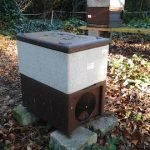
A Simple Method of Simultaneously Raising Queens and Producing Nuclei
The method described here aims to simultaneously produce both queens and nuclei and would probably suit a medium-sized beekeeping operation, a few beekeepers working together, or an association’s breeding programme ...
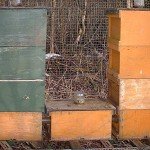
John Harding Queen Rearing
The main purpose of this systemis its versatility and to have an additional use so you always double its value in purpose, and it's not lying around for the best part of the year unused. Given the choice honeybees prefer vertical narrow empty spaces with unlimited depth, and just enough space to build 5 or6 combs side by side ...
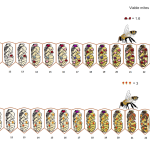 MAGGIE GILL
Tropilaelaps
In areas where both Tropilaelaps and Varroa are present it has been reported that Tropilaelaps are a far more damaging pest than Varroa. Both Varroa and Tropilaelaps have been shown to vector viruses when they feed and in one study 100% of Tropilaelaps mites examined harboured deformed wing virus (DWV) compared to only 81.8% of Varroa ...
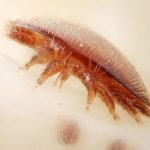
Understanding Varroa Survival
A 2025 study in Apidologie by Parenzan et al. reveals that Varroa destructor mites can survive far longer on honey-bee larvae than previously believed ...
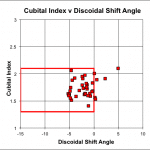
Work with Bangor University
North Wales BIBBA groups have teamed up with South Clwyd Beekeepers and Bangor University. The first study by Bangor concerned a survey of bee wings throughout South Clwyd. The wings were analysed using DrawWing and Morphplot. The samples were collected by BIBBA breeding groups and members of SCBKA and then tested by a number of BIBBA queen rearers and the Bangor researcher Elise Keller ...
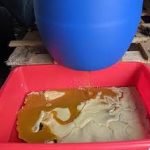
Winter Wax Processing, Yorkshire Style!
During the winter months, one of the jobs that I like to get out of the way is processing all the cappings and old combs from the previous beekeeping season. I decided to create a new steaming system ...
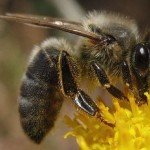
Native Honey Bees
It is fairly certain that the Dark European Honey Bee, Apis mellifera mellifera, has been native to mainland Britain since before the closing of the Channel Landbridge, when sea levels rose following the last Ice Age. They became isolated and adapted to the different conditions they found themselves in ...
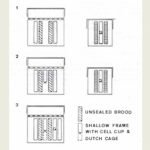
Queen Cell Production in a Single Brood Chamber Colony
The following simple method was observed by BIBBA's Director, Ken Ibbotson, in Holland. It is suitable for a beekeeper with single brood chamber colonies wishing to rear a small number of queens. It should produce 7-10 very good queen cells ...
The Dark Bee Apis mellifera mellifera in the United Kingdom
The article below is based on a lecture given by Philip Denwood to the SICAMM Conference in Landquart, Switzerland, on 1st September 2012 Articles by Dr. Dorian Pritchard,1 and by Norman Carreck2 of the Laboratory of Social Insects at Sussex, have presented the evidence, convincing in my opinion, for the immigration of the honey bee into mainland Britain across the land bridge from Europe at least 9000 years ago, and its continued existence here ever since. This bee would have been the ancestor of the Apis mellifera mellifera or Dark European subspecies and geographical race, as would any later ...
Honey bee origins, evolution & diversity – Ashleigh Milner
What are honey bees, anyway? Bees of all kinds belong to the order of insects known as Hymenoptera, literally "membrane wings". This order, comprising some 100,000 species, ...
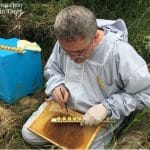
Bee Improvement Strategies
A key question any individual or group should consider is what method should I/we follow to Improve our bees and to produce queens. There are a few key choices depending on your aims, capacity (time and equipment) and capabilities. I’m assuming the reader is looking for a bee that is native and/or locally adapted.Kevin Thorn ...
Methods for Rearing and Selection of Queens
This publication from the COLOSS beebook covers a wide range of methods currently in use and recommended in modern queen rearing, selection and breeding ...
Queens: Collaboration and how to make it easy on yourself and your bees – by Karl Colyer
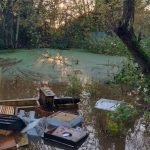
Last year, I did several splits including splits of all my favourite breeder colonies in mid-August. It was a slight gamble where I live in Cheshire but the weather was fair and the outlook very similar. Roger mentioned that I was out of action from last September (2 months to get walking, a year to pass a medical to get my driving licence back and lots of mobility issues in between). The rivers around me flooded while I was in hospital and many of my bees and colonies were literally swept away. read more ...
Controlled Mating and Hygienic Behaviour
we compared the levels of hygiene in colonies headed by daughter queens reared from hygienic mother colonies that were either instrumentally inseminated with sperm from drones reared from hygienic colonies or allowed to mate naturally with naturally-occurring drones ...
John Dew’s Views – the Best Bee
There is a tendency amongst some beekeepers to believe that the “grass is greener on the other side of the fence”, that imported bees are superior to the indigenous bee ...
Appetitive floral odours prevent aggression in honeybees
Honeybees defend their colonies aggressively against intruders and release a potent alarm pheromone to recruit nestmates into defensive tasks. The effect of floral odours on this behaviour has never been studied, despite the relevance of these olfactory cues for the biology of bees. Here we use a novel assay to investigate social and olfactory cues that drive defensive behaviour in bees. We show that social interactions are necessary to reveal the recruiting function of the alarm pheromone and that specific floral odours—linalool and 2-phenylethanol—have the surprising capacity to block recruitment by the alarm pheromone. This effect is not due ...
How I select my ‘Breeder Queens’
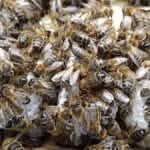
At the start of a new season I like to make a shortlist of which queens are good enough to breed from, in other words, to become my breeder queens. I do this by looking at the current condition of the colony as well as looking at the record of past performance ...
Local bees better than imports
locally adapted strains of honey bee consistently performed better than the “foreign” strains. Honey bee genotypes and the environment In recent years, much attention has been focused on the global problem of honey bee colony losses. Among the many explanations for these losses, variability in the genetic makeup and vitality of honey bee populations ...
Tolerance to Varroa destructor in Ireland
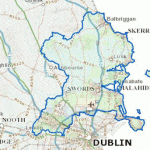
In North County Dublin, Ireland, a region that has a relatively self-contained beekeeping regime with little movement of colonies or queens into the area, tolerance (co-adaptation) to varroa mites is becoming established ...
Estimating C-lineage Introgression
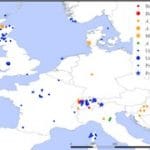
Conservation efforts for A. m. mellifera are underway in multiple European countries requiring reliable and cost-efficient molecular tools to identify purebred colonies. Here, we developed four ancestry-informative SNP assays for high sample throughput genotyping using the iPLEX Mass Array system ...
Breeding honeybees on a small scale – Dorian Pritchard
With an open mating system I find you can manage with just four colonies to breed successfully ...
Is the Dark Bee Really Native to Britain and Ireland?
This article by Dorian Pritchard was originally published in BIM 30 Winter 2008 ...
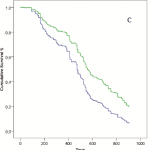
Genetic Origin & Survival
On average, colonies with queens from local origin survived 83 days longer compared to non-local origins (p < 0.001). This result demonstrates strong genotype by environment interactions. Consequently, the conservation of bee diversity and the support of local breeding activities must be prioritised in order to prevent colony losses, to optimize a sustainable productivity and to enable a continuous adaptation to environmental changes ...
Honey bee conservation
In order to compensate the dramatic losses of honeybee colonies that we see globally for many years now, beekeepers try to restore their apiaries by importing colonies or queens in the hopes that those survive better than their previous bees. Such imports increase the level of introgression with local honeybee populations in which genetic variability is geographically highly structured ...
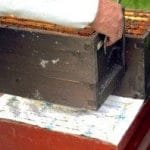
Steve Rose Queen Rearing
This is a method of persuading non-prolific and non-swarmy bees to raise queen cells on a regular basis through the season ...
Breeding for resistance to Varroa destructor in Europe
The rich variety of native honeybee subspecies and ecotypes in Europe offers a good genetic resource for selection towards Varroa resistance ...
A Native Dark Bee Project
Margie Ramsay reports on a project reintroducing A.m.m. to a reserve in Scotland. Update July 2015 In 1905, just before the First World War there was a 20 year long bee plague called Isle of Wight disease which was considered by many, including bee breeder Brother Adam, to have eradicated the native subspecies of dark European honeybee Apis mellifera mellifera from our Isles ...
New Approach to the Mitotype Classification
The main problem of the black honeybee in Russia and European countries is the preservation of the indigenous gene pool purity; A new approach to the classification of the honeybee M mitotypes was suggested ...
Neonicotinoids and Bumblebees
Professor Dave Goulson – Bees, Pesticide and Politics: the impact of neonicotinoids on UK bumblebees ...
The health and status of the feral honeybee population of the UK
abstract of thesis Catherine Eleanor Thompson: While declines in managed honeybee colonies are well documented, little is known about the health and status of feral honeybee populations. To date no studies have considered the wider pathogen burden in feral colonies, whether they represent a genetically distinct population, a remnant native population or a unique source of genetic resistance ...
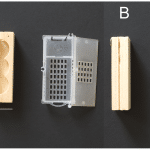
Caging Virgin Queens
Comparing Alternative Methods for Holding Virgin Honey Bee Queens for One Week in Mailing Cages before Mating ...
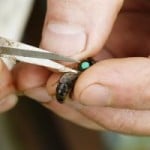
Find, Mark & Clip the Queen
Finding queens in Spring, and marking and clipping them whenever necessary, has become an integral part of my seasonal beekeeping programme. Advice from Micheál Mac Giolla Coda ...
Genetic Identification and Introgression Analysis
This system describes an essential tool in Europe for genetic stock identification and estimation of admixture levels which can assist management strategies and monitor honey bee conservation programs. View pdf ...
Queen Rearing Timetable
This Microsoft XL file was written by Angus Stokes and Albert Knight and provides an interactive way to prepare timetables for using the Jenter or Cupkit Cellplug Box. With a bit of tweaking it can be used for other methods of cell raising ...
Bacteria Help Honey Bee Larvae
Honey bees are under constant pressure from a whole host of stresses—diseases, poor nutrition,sublethal effects of pesticides, and many others. While researchers have been aware for a number of years of a community of bacteria in adult bees that may aid with some of these stresses,Agricultural Research Service researchers have identified the first bacteria that offer a benefit to bee larvae ...
Colonsay a honey bee haven
TWO remote Hebridean islands have become the UK’s first reserve for native honey bees after a landmark ruling by Scottish ministers ...
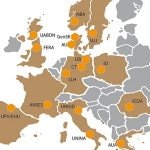
SMARTBEES project
The SMARTBEES project is focused on identification, breeding and propagation of locally adapted honey bees with high performance and resistance traits to Varroa destructor ...
Male Fitness of Honeybee Colonies
We found clear evidence for an extensive diversity in male mating success at the colony level. Some colonies had significantly more matings (about an order of magnitude) than other drone producing colonies in the same year ...