Have a question about BIBBA, our membership or the local honey bee? You're in the right place! We've pulled together answers to some of the most common questions we’ve received over the years.
About BIBBA
Bee knowledge
Have a question about BIBBA, our membership or the local honey bee? You're in the right place! We've pulled together answers to some of the most common questions we’ve received over the years.
Yes! We became a Charitable Incorporated Organisation in 2023 (charity no: 1200969). To find out more, click here.
Beowulf Cooper (1917-1982), a Government (MAFF) entomologist, was a founding member of our organisation back in 1963. To learn more about his contributions and legacy, click here
BIBBA support a ban on imports. Importation poses a biosecurity risk and works against the development of local adaptation and varroa resistance. The mixing of different sub-species makes selection and improvement of our bees more difficult and it negates the effects of ‘natural selection’ which produces hardier bees. To learn more, click here
A very common question! For various reasons we do not supply members with breeding material. This includes the amount of work involved and we believe that bees should suit their local conditions.
The role of BIBBA is to encourage beekeepers to raise their own bees and queens. There is a facility for the purchase of bees and queens from members here
We recommend joining a local beekeeping group to connect with other like-minded individuals and work together to improve and conserve locally adapted bees.
Here is a list of active local groups
If you have any non-commercial news or information that you believe to be of interest to other members, feel free to contact us. We may use it in our online BIBBA Monthly (BM)
From exclusive member content to courses led by the UK’s beekeeping experts, there are a number of benefits to joining BIBBA. Find out more here
Of course! We also offer a discounted price for a joint membership. Find out more here
Yes, don’t worry. All previous editions of BIBBA Monthly are online, however only the latest edition is available to non-members. To read older versions, please sign up and login to the member area.
There are around 28 sub-species of the western honey bee. In the UK and Northern Europe, the native sub-species is the Apis mellifera mellifera (Amm), also known as the British Black Bee, Old English, Irish Black Bee and Brown Bee.
Many sub-species of bee have been imported into the UK and Ireland for more than 150 years. This has resulted in ‘pure stocks’ of bees becoming difficult to find.
‘Near native’ refers to bees which have both a native appearance and characteristics but may contain DNA from other sub-species.
Conditions can vary considerably across locations, even over a relatively short distance, and adaptation takes time to achieve.
Local bees are also accustomed to the specific diseases and environmental challenges of their area, making them more resilient and better suited to thrive.
By sourcing queens and bees locally, you help maintain strong, well-adapted colonies, reduce the risk of introducing pests and diseases from outside regions, and eliminate unwanted behaviour in future generations.
Karl has been keeping bees since 2003, combining his passion for beekeeping with his knack for hands-on craftsmanship, building his own hives from recycled wood. As a practical and skilled bee breeder, Karl draws on his background in engineering, quality, and production to approach beekeeping with precision and care.
In his spare time, Karl set up a not-for-profit social enterprise, Bees in our Community, providing businesses and individuals with a gentle introduction to beekeeping. This initiative not only helps grow the number of colonies but also encourages more people to become beekeepers.
Karl has a growing number of hives and offers his support to new beekeepers via a mentoring scheme
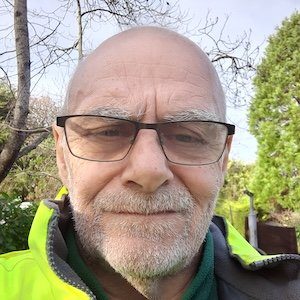
Paul Verrier, a beekeeper since 1982, is a retired bioinformatics research scientist who spent most of his working life at Rothamsted and while spending many years working with the Rothamsted Insect Survey, he was able to keep abreast of bee sciences and is now totally addicted to honeybees.
David Buckley’s passion for beekeeping began at boarding school, where he rescued several hives destined for a bonfire. When a local beekeeper declined them, he stored the hives secretly, determined to save the bees. He later spent three years learning from Beowulf Cooper, a founding member of BIBBA, and joined the BBKA in 1966.
Since then, David has bred his own queens following Beowulf’s principles, with some tested at over 80% Amm, showing early signs of hygienic behaviour. His work focuses on the importance of Amm and its influence on the current bee population, particularly amid ongoing concerns over imported pests such as tropilaelaps.
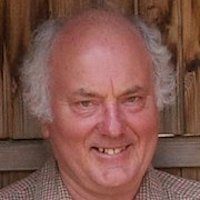
Roger is a practical beekeeper who has been working with bees since 1963.
At one point managing 130 colonies, Roger now oversees around 25, in addition to managing between 30–50 colonies at his local Beekeepers Association apiary, which he uses for teaching purposes.
A passionate educator and prolific lecturer, Roger focuses on the practical aspects of beekeeping, including queen rearing and bee improvement. Whether teaching, writing or speaking, Roger’s dedication to sharing knowledge has cemented his reputation as a leading figure in the beekeeping community.

An experienced journalist, Steve began beekeeping as a teenager in Yorkshire, helping to move hives to the North York Moors for the heather season. He returned to beekeeping in 2021 with a passion for treatment-free practices and raising dark Amm bees to support UK sustainability.
Now managing 30 colonies on the Kent, Sussex and Surrey borders, Steve runs a semi-commercial operation focused on breeding locally adapted bees. He also leads the Westerham Beekeepers’ bee breeding apiary, working to develop treatment-free, near-native stocks to benefit the wider community.
The lecture topic came about as a result of a question I set when I wrote the paper for BBKA Module 7 “Selection and Breeding of Honeybees”. “A group of 6 beekeepers in a local association, each with 5 to 10 colonies want to improve their local bees. Describe how they could set up a breeding program and what equipment would be needed. (They have available to them an isolated moorland site 30 miles away where the nearest known beekeeper is over 5 miles away.) Include a timescale for the planned improvement.”
The question was tackled by only a small number of candidates, and the results were disappointing. This would suggest that even at this level of beekeeping, few had a clear understanding of setting up a breeding group and collectively improving their bees. The lecture will try to show how to set up a breeding group and the timescale required in order to achieve any genuine improvements. Examples will be shown with reference to the North Wales Breeding Groups.