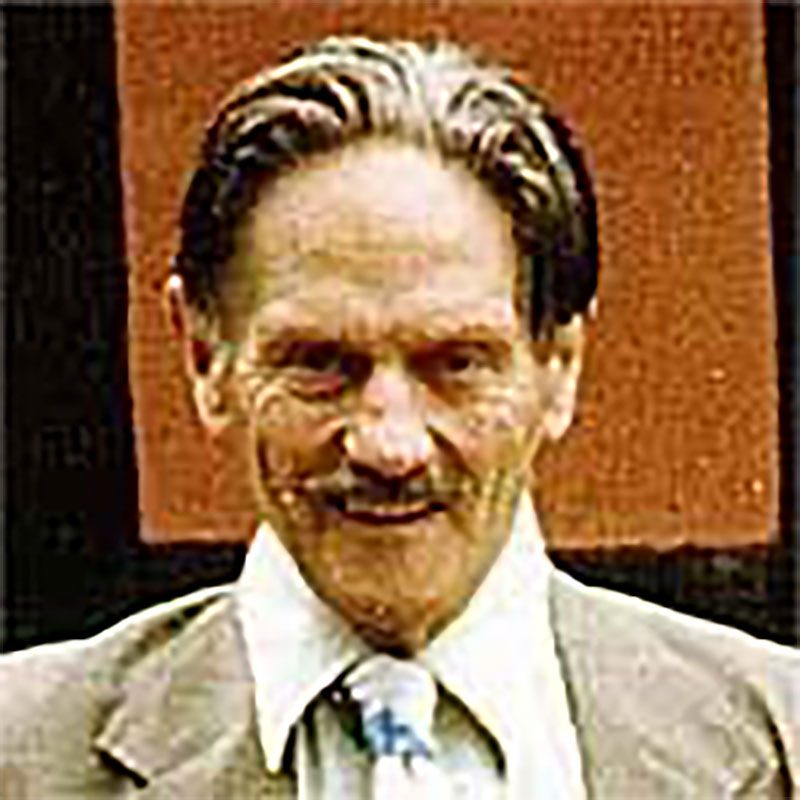
Our history begins with Beowolf Cooper, an entomologist employed by the Ministry of Agriculture, Fisheries and Food.
About Beowulf Cooper
Beowolf recognised the damage foreign sub-species of honey bees did in the UK, asserting that the hybridisation caused by imports was a huge barrier to bee improvement.
This was widely seen as a direct challenge to the views of Brother Adam, a Benedictine monk and one of the world’s leading authorities on honey bees – both then and now. The monk’s life’s work focused on creating a hybrid bee known as the Buckfast bee.
Beowulf also found that the native bee, Apis mellifera mellifera, was alive despite Brother Adam claiming it became extinct in the early 1900s.
As a passionate beekeeper, Beowulf published multiple booklets to educate and inform fellow beekeepers on how to best manage colonies. His writings contributed to greater awareness around the importance of native honey bee conservation and the practices of bee improvement.
Beowulf died in 1982, leaving behind a fully-fledged organisation dedicated to preserving and improving native honey bee populations – a legacy that continues to thrive today.