CONTENTS
- VR behaviour after the main flow
- Autumn Queen Bee Introduction
- CaSCA Winter Course 25/26
- Teaching Toolkit Update
Varroa Resistant Colonies
VR behaviour after the main flow
Here in the southeast of England, the ivy flow has started and the bees are very active on sunny days filling any remaining space not being used by the queen to lay her winter bees. It’s been a hectic season, marked by an early warm spring that brought an abundance of honey and then a hot dry summer that hit the main flow and meant a smaller summer harvest.
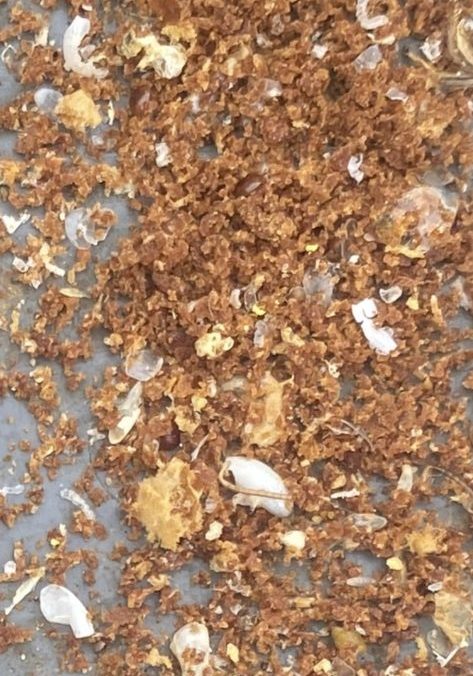
During the run up to the ivy flow, my varroa resistant colonies were busy in the hives dealing with the mites and there has been a marked increase in the amount of uncapping of worker brood cells and chewing out of infected pupae as evidenced by exoskeleton parts on my insert boards.
This is a common pattern, with uncapping less evident during a flow as the bees focus on processing the incoming nectar, then picking up again between flows as they focus on hive hygiene.
You’ll see in the pictures to the right and below that the proportion of cells uncapped varies between colonies and can be very high in some colonies. This doesn’t necessarily mean that one colony is more resistant than another. It could be that one colony is better at locating infected pupae than another, and more cells are uncapped and then recapped in some colonies.
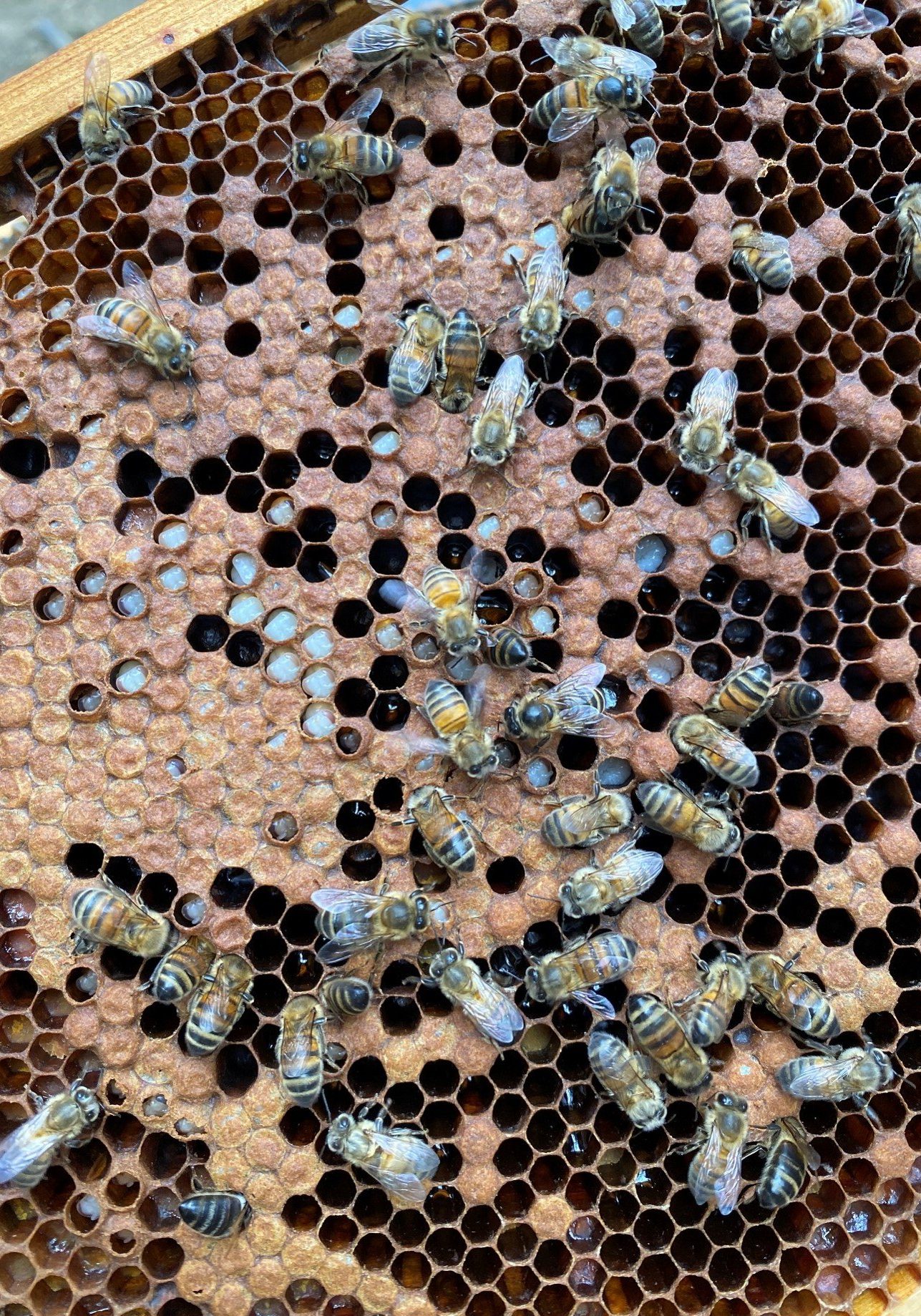
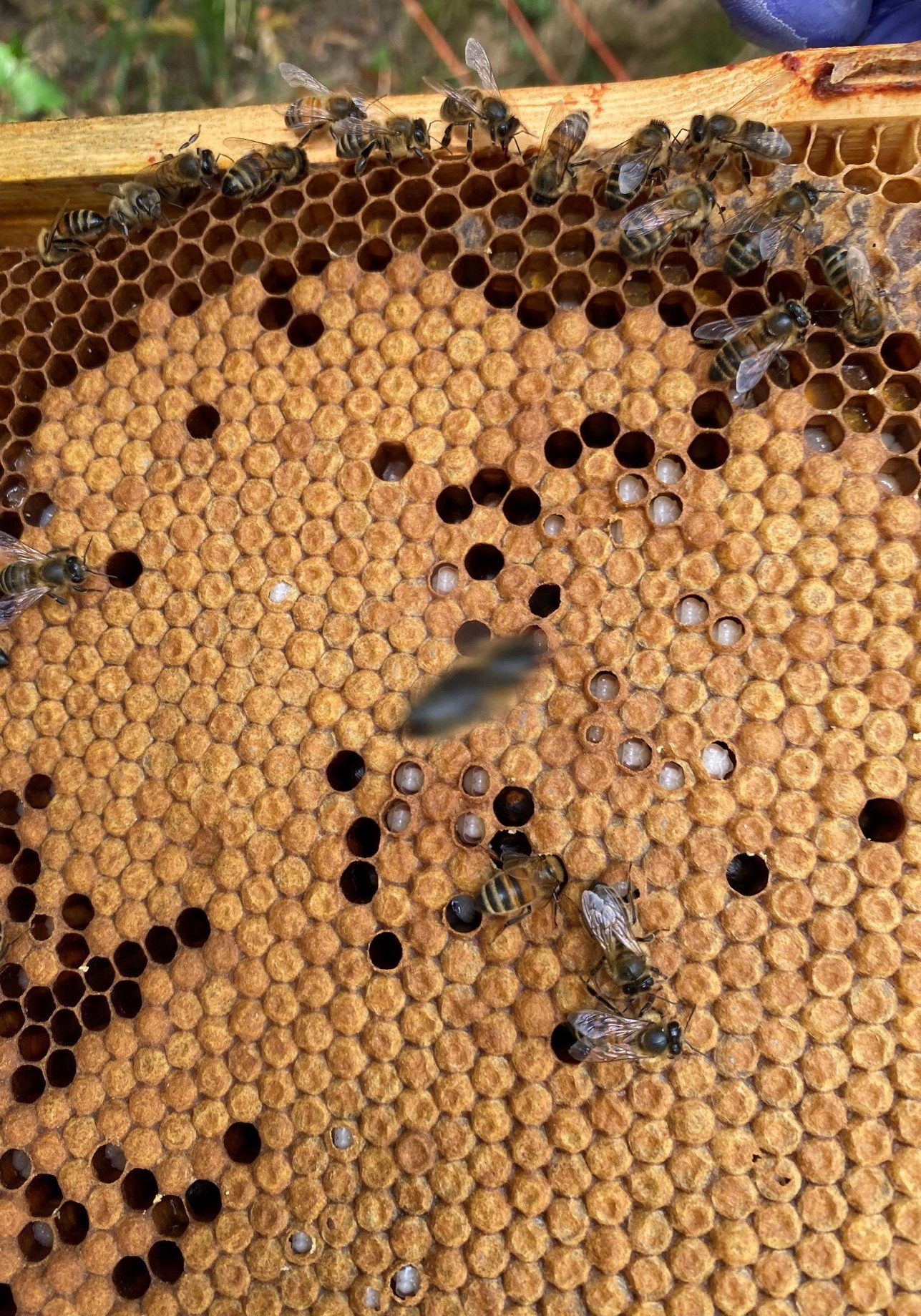
I record my uncapping observations alongside observations of exoskeleton remains on the insert boards and my regular mite count, and the three put together tell me how resistant the bees are. Here are some good examples of exoskeleton parts on one of my insert trays (see picture below)
In these monthly articles I have talked about the seasonality of mite drops and I’ve been expecting a seasonal spike in the daily mite drops on my insert boards now that the brood nests are contracting. I am seeing this in some colonies, where daily drop numbers are up from fewer than one a day to five to eight a day. This spike in drop numbers should peter out as quickly as it started and return to around one a day.
There are a couple more colonies where the drop is around 10 to 12 a day. That might seem concerning, but these colonies have been recording low daily drop numbers for the rest of the season and so the average daily drop for the year as a whole will still be well within my expected parameters. It will, however, help inform my queen rearing plans for 2026 and I probably won’t be breeding from these colonies.
In one of my apiaries, where I started with varroa resistant queen lines and have selected for the best performers over the past four years, I am not seeing the spike. Mite drop numbers remain fewer than one a day, where they have been all season. There’s still uncapping and chewing out of pupae, but varroa drops remain negligible. I am hoping that this apiary has really got on top of the varroa, although I won’t be dropping my guard and will continue to observe and count.
Talking of counting, my insert boards remain in all year round. From next month, they’ll be invaluable in telling me what’s going on in the hive without me going inside and I can still monitor the mite count throughout the whole colony throughout the winter. That’s why it’s my method of choice.
Whatever method of mite counting you use, Professor Stephen Martin’s updated mite calculator (https://www.varroaresistant.uk/mite-calculator/) will help you work out your thresholds for treating or not, and it takes into account the seasonality in mite drops. He explains the methodology in the September edition of BBKA News.
As we know, a bad varroa infestation damages the health of the colony and eventually leads to its demise as viral loads increase and disease takes hold. I knew my varroa resistant colonies were healthy, and in late August I had confirmation when my seasonal bee inspector visited to inspect some of my colonies for disease, all of them untreated for at least two seasons and some for five. After an enjoyable day and some great conversations, I was really pleased that she confirmed they were all healthy and thriving. It was really good to share an understanding of varroa resistant traits with the inspector, and to have ‘varroa sensitive hygiene’ recorded in the notes the inspector took for each colony.
Every month through the season, we will publish an article detailing what’s going on in varroa resistant apiaries, explaining our observations, to help those who may be starting their varroa resistant journey.
Varroa resistant summary for September:
- Uncapping and chewing out is very evident in varroa resistant colonies at the moment
- Daily mite drop numbers are the highest they have been all season in most colonies as the brood nest contracts, but this is an expected seasonal pattern and the spike should end in the next few weeks.
- Whatever method of mite counting you use, the mite calculator on varroaresistant.uk will help you determine whether you need to treat or not
- My insert boards remain in all year round and I’ll be reporting my observations from the boards over the next few months
Queen Bee Introduction, and the Value of Native Bees with winter in mind
The practice of introducing queen bees is an essential skill to learn and to understand why it is sometimes needed. Most beekeepers will come across a colony that has either become queenless or has a failing queen. Late summer is often the time when successful introduction can be achieved if careful preparation of the recipient colony is conducted. Requeening with native (apis melifera melifera) AMM or locally adapted bees, especially when dealing with colonies comprised of less native, imported, or commercially bred bees, takes advantage of the natural process of queen replacement under the supercedure impulse. As global bee populations face ongoing threats from disease, pesticides, and changing climates, the importance of selecting the right queens—and timing their introduction—has never been greater. In addition, preparing colonies for winter through careful feeding and management is crucial for ensuring colony survival and productivity in the following year.
Introducing Queen Bees to Colonies
Queen introduction is a delicate yet vital process. The queen bee is the heart of the colony, responsible for the maternal genetic makeup, temperament, and productivity of her offspring. When colonies are composed of bees not well adapted to the local environment, introducing a new queen—especially one from local or native stock—can dramatically improve colony health and resilience. Bees left to their own devices re-queen naturally.

Queen Introduction

Drone Laying Colony
Why Introduce a New Queen?
There are several reasons for introducing a new queen:
• Poor Colony Performance: Colonies headed by failing queens or queens from non-native lines may show poor brood patterns, low honey production, or increased susceptibility to disease.
In my opinion, overly prolific strains of bee, fail to survive winter because they need far more food and frequently starve. The 20kg rule is only a guide-line, which does not take into account sub-species demands for nutrition.
• Temperament Issues: imported sub-species often create aggression in the F2 generation. Queens generally mate on the wing so imported queen’s drones detrimentally influence the genetic pool created by conscientious beekeepers trying to do the right thing and breed their own locally adapted bees.
• Introducing queens, especially native and locally adapted bees, increases genetic diversity and resilience within the apiary. It is an established fact that local bees have evolved in harmony with their local flora and fauna. This enables the multitude of pollinators to benefit from the wide and diverse bounty, with many specialising with their preferred evolutionary flowers.
The Queen Introduction Process
The process typically involves the following steps:
• Removal of the Old Queen: the old queen is removed ideally 12-24 hours before introducing the new one.
• Introducing the New Queen: The new queen is usually caged with a few attendant bees and a candy plug if being outsourced. We prefer to remove the attendants, but some beekeepers don’t. The caged queen is suspended in the hive between two brood frames, allowing the colony to become accustomed to her pheromones over a few days. The bees chew through the candy, gradually releasing the queen. Don’t forget to remove the clip at the end of the cage.
• Monitoring Acceptance: The hive should be monitored for signs of queen acceptance about two weeks after introduction. Just check that the queen is laying eggs! There is no need to see her as eggs confirm her presence. A feed may stimulate egg laying and improve acceptance.
• Another successful method of introduction is to unite two colonies together using a newspaper barrier which the bees chew through to join together. Firstly, gradually move the colonies close to each-other. Find the queen in the cull colony and despatch her. Place a sheet of newspaper over the brood frames of the retained queen and make a few pin holes in the paper. Then put the now queenless colony on the papered colony and leave alone for at least a week. The bees chew away the paper and usually unite safely.
Why Requeen Now?
Late summer to early autumn is often considered an ideal time for requeening. By late summer, the colony population is declining as summer bees die off. Older queens and the queens that headed swarms this season are frequently superceded, so capitalising on this instinct improves acceptance of introduced queens.
Introducing a new queen in late summer ensures that the last generations of brood before winter are laid by a young, vigorous queen. This establishes the new queen’s daughters in the colony. These "winter bees" are physiologically different—fatter and longer-lived—and will carry the colony through the cold months.
Colonies with young, well-mated queens are more likely to rapidly build up in early spring, giving them an advantage when nectar flows begin. They are less likely to swarm the following spring, as younger queens are less prone to initiate swarming behaviour because they have adequate queen substance from the new queen. AMM and some locally adapted bees have a disinclination to swarm in their first season typically.
Benefits of Native and Locally Adapted Bees
Selecting queens from native or locally adapted bees offers several long-term benefits for the beekeeper and the environment in our opinion.
Native bees are better suited to local climate patterns, flowering periods, and disease pressures. They are more likely to survive harsh winters, variable springs, and hot summers as they adapt quite readily to new challenges with fewer interventions. Hygienic behaviour is an example of this in the context of varroa tolerance. The native bee has also evolved in harmony with other pollinators, and the local flora, so AMM may adapt more readily to climate and environmental change.
Over generations, local bee populations have developed some resistance to endemic pests and diseases, such as Varroa mites, Nosema, wax moth and chalk brood. Indeed hygienic behaviour is being observed in some of my own bees which I have been selecting for 59 years this year.

Native Queen

Feeding
Feeding for Winter Preparation
As autumn approaches, colonies must have sufficient food stores to survive the winter and the locally adapted bee with AMM genes typically survives in single national brood chambers. Sufficient honey should be left for the bees’ survival as natural food is best. It contains all the nutrients needed for safe winter survival. Feeding may be necessary, especially for colonies recently requeened or for those whose honey reserves are inadequate. Late summer requeening seems to stimulate brood rearing and pollen foraging increases, thanks to ivy and late balsam so ensure stores are adequate. It is recommended that 20kg of stores are available for winter.
When and What to Feed
Feeding should begin as soon as the main nectar flow ends, typically in late summer or early autumn. We usually clear honey supers into a brood chamber of foundation above the original brood box. When the bees have cleared from the honey supers we feed heavily to give all those summer bees wax building to do. The combs are usually drawn down to the bottom bar with beautiful white wax and capped winter stores. Queens seem to prefer these fresh combs in spring and lay them up happily.
A heavy sugar syrup (2:1 ratio sugar to water by weight) is recommended to mimic the viscosity of natural honey and encourage bees to store it for winter. The bees must have enough time to process this feed before clustering or fermentation may occur.
If natural pollen sources are scarce, pollen patties or supplements may support the production of healthy winter bees with adequate fat body reserves. However, our local bees have never needed this artificial support as their instinct has always been to store pollen throughout the autumn, in and around their brood nest.
If feeding is completed by mid-October, then there should be no necessity for fondant feeding in the winter months. Emergency feeding in regions with long winters or very prolific bees, may be necessary but judicious husbandry in autumn mitigates this.
Conclusion
In summary, requeening less native colonies with queens from locally adapted or native stock is a sound strategy for improving colony health, productivity, and survival. Timely queen introduction before winter maximizes the impact, ensuring that resilient winter bees are reared under the new queen’s influence. Combined with appropriate winter feeding, these management steps help secure strong, vibrant colonies ready to thrive when spring arrives. Through thoughtful management, beekeepers can play a pivotal role in supporting local and AMM bee populations and the ecosystems that depend on them.
David Buckley
Buckley’s Bees Ltd
10th September 2025
CaSCA Winter Courses
Can BIBBA Help you make money from your beekeeping, make it a sideline or a business?
BIBBA has established a group of beekeepers to help them with the commercial side of their beekeeping. This includes producing more honey, getting a better price, reducing costs and efficiency. This includes but is not limited to raising your own queens. This is called CaSCA, which is the acronym of “Commercial and Semi-Commercial Apiarists”.
We have received feedback that there is a gap in the support offered to beekeepers between the help available from the British Beekeepers Association and the Bee Farmers Association and we want to help bridge that gap.
The key question is what can BIBBA offer small-scale semi-commercial beekeepers? The answer will vary depending on the needs of the beekeepers, but there are likely to be some common threads. Such areas may include (and we have already had Zoom sessions on some of these):
1. Helping beekeepers expand their hive numbers
2. Developing and selling other hive products
3. Appropriate colony and business management techniques
4. Knowledge exchange e.g. better extraction techniques
We ran a number of events two winters ago which were well received and we are going to run these again in more locations. If you have already attended one of these events the content will be similar but we all know that repetition helps develop ideas we had but have not yet implemented and there are new aspects to be garnered from the same information.
The events are free to BIBBA members and membership is just £20 by direct debit so attendance on this seminar will more than cover this. You should get ideas that will save or make you hundreds if not thousands of pounds.
So if you would like to make some money from your beekeeping or would like to make some or all of your living from your bees then this seminar is for you. Please see the attached for details of an event near you.
Roger Patterson

Teaching Toolkit from BIBBA
BIBBA is developing a “Toolkit” for those involved in teaching beekeeping, such as teachers, demonstrators, mentors, teaching apiary managers/teams and BKA committee/officials. The toolkit is intended to help with teaching by providing suggestions for setting up any kind of teaching event, such as indoor and apiary meetings. It will cover the widest range of topics from introduction to beekeeping for non-beekeepers up to the highest level, both theoretical and practical. The emphasis will be on understanding and working with bees to practically provide what they require.
The aim is to increase the knowledge and skills of all beekeepers to help them enjoy the craft and encourage the use of locally adapted and varroa resistant bees. Not only is there advice on developing and delivering teaching methods, but a signposting facility to good, sound, reliable material, some of which may be new and wholly geared towards supporting teachers.
Two very productive online meetings were held with potential users, with some good suggestions for the needs of teachers. The toolkit is likely to take some time to develop, but we hope to put a basic version on the BIBBA website, with additions as they are prepared.
BIBBA supports the banning of honey bees imports.
At a recent BIBBA trustees meeting it was agreed to support a ban on honey bee importation as policy. This is in response to the known threat of tropilaelaps being introduced to our shores via bees from Europe. Although BIBBA has previously not supported an outright ban for some time, this increasing threat leads us to adopt a stronger position for the good of the craft, the bees and our members.
The opinions expressed in articles in BM are those of the authors and do not necessarily reflect those of the BIBBA Board. While the editorial team considers all material received carefully before publishing, it does not disbar those who may have a perfectly good argument.