November: An essential winter tool – the varroa insert board
It’s bonfire night, and in my small part of the southeast of England we have yet to experience a ground frost. That’s the latest that I can remember. Some colonies are still finding pollen, which bodes well for the re-start of egg laying in January, and there was definitely a strong ivy flow, which may prove to be a blessing or a curse (Roger Patterson explains why here: https://youtu.be/qwqS_v9Q3OU).
Although recent temperatures, at 15 degrees or more some days, would have allowed me to go into the hives, there is now reason for me to do so. I’d rather leave the protective propolis envelope intact and not needlessly disturb the bees. I can tell all I need to know over winter by examining the insert trays each time I go to check and heft the hives.
I leave my insert boards and trays in place all year round, allowing me to do varroa mite counts and record evidence of pupal parts as varroa resistant bees chew out infected pupae whatever the season. During winter, it also tells me what else is going on inside the hives and ensures there are no cold drafts from underneath.
I checked in on some of my apiaries today and here’s what I learned from the bottom boards:
- Daily varroa mite drops in my best performing colonies average fewer than one a day, and only slightly more in most others. These are very low counts for the time of year.
- There was a burst of brood during the ivy flow but that is now petering out. During this brood period, bees were chewing out varroa infected pupae as evidenced by pupal parts among the brood capping debris.
- Some colonies have moved on to their stores as evidenced by lines of white wax cappings on the insert boards towards the sides of the brood box, although hives are still hefting heavy.
Without opening the hives, I know what the colonies have been up to, where the cluster is positioned, and I know that they continue to control their varroa populations. To do an accurate mite count and look among the debris in more detail, I take a photo of the insert tray (slugs and all) with my phone and then I can blow it up and look at sections once I’m in the warmth.

If you weren’t able to visit the BIBBA stand at the National Honey Show, then we have released a new video to help beekeepers identify the signs of the key varroa resistant traits of uncapping worker brood and chewing out infected pupae. This shows examples of pupal parts on bottom boards. You can watch the video here: https://youtu.be/JjQjKI_jl5I.

It was fantastic to meet so many beekeepers at the show who are starting out on their varroa resistant journeys and more who are some way down it. There has been a complete change in attitudes and understanding over the past couple of years. BIBBA and the team at www.varroaresistant.uk will continue to provide resources to help you on your own journey. If you haven’t already, you can sign up for a supportive email journey at https://bibba.com/varroa-resistance/.
If you have read previous varroa resistant articles in BIBBA Monthly, you’ll know that in the summer I re-queened several ‘mite breeder’ colonies that weren’t varroa resistant with new queens from varroa resistant queen lines. I observed that uncapping and chewing out, which had previously been absent, started as soon as the new queen’s offspring became dominant in the hive. Average daily mite drops, which had been constantly increasing, levelled off.
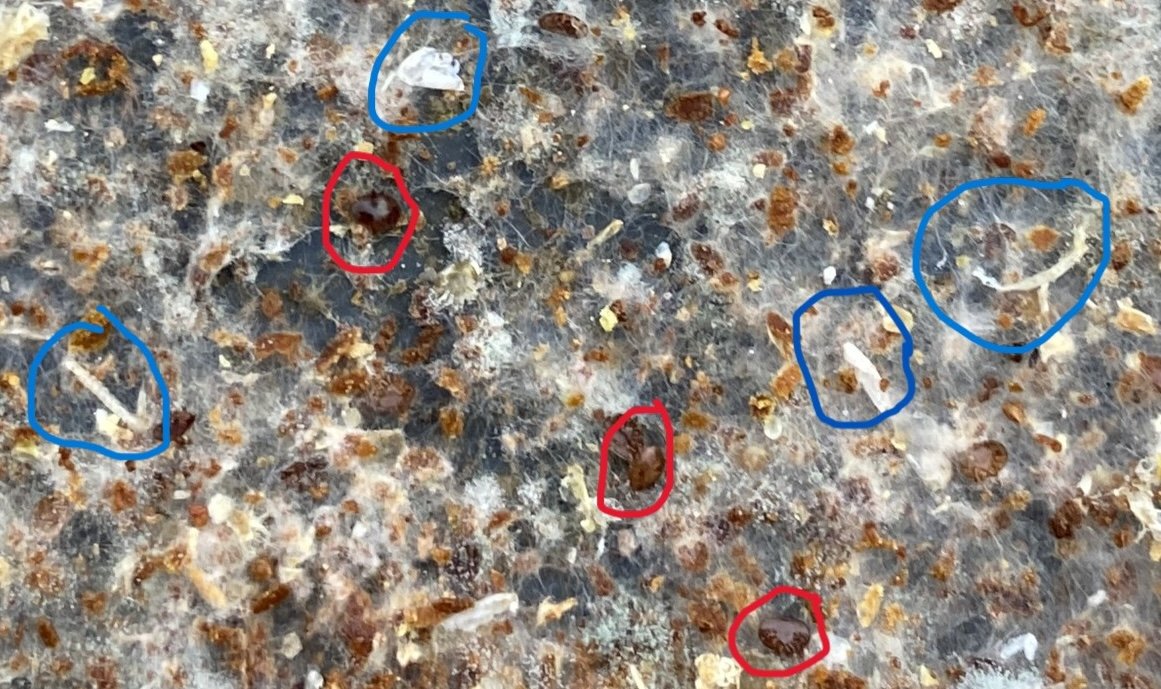
Checking the insert trays on those colonies now, the mite drop is higher than in my long-term varroa resistant colonies (currently dropping fewer than 1 a day), but at between 3.4 and 4.6 a day over the last three weeks, I am very positive. This is a low mite count for the time of year. Amongst the debris were pupal parts - the tell-tale sign that infected pupae are still being chewed out. These previously varroa naïve colonies are now waging war on the mites led by varroa resistant queen line.
If you’re unsure what constitutes a low or high mite count, you can put your mite count over a set number of days into the calculator at https://www.varroaresistant.uk/mite-calculator/.
Next month, we’ll look at further observations from the insert trays as winter properly kicks in, and I’ll talk about how I’ll be selecting which colonies to breed from next season after reviewing the data from the whole of 2025 and comparing it with previous years.
Key for me will be looking for colonies to end 2025 with an average daily mite drop that is the same or lower than at the start of the year.
Varroa resistant summary for November:
-
Insert boards and trays are now the beekeeper’s essential tool for monitoring varroa resistance over winter. You’ll be able to do average daily mite drop counts throughout the cold period, while pupal parts will evidence chewing out during periods where there is brood.
-
Varroa mite counts should now be low and falling as the ivy flow ebbs and queen go off lay once more.
-
Winter jobs include continuing to record your average daily mite drop and observations of pupal exoskeletons every time you go to check and heft hives.