Planning for the year ahead
After such a mild autumn, it has almost been a shock to experience the recent cold snap. A quick peek through the Perspex crown board on a couple of hives shows the bees clustered underneath, sustained by the stores left on the hives for them to overwinter on. For me, the cold snap is no bad thing, helping to re-set nature and naturally thin out the number of potential pests for my colonies next year.
Most hives are still hefting heavy, so I’m not worried about stores for the most part although some beekeepers are reporting a lot of crystallized ivy honey in frames and indeed the tell-tale signs of chewed out white crystallized stores are evident on some insert boards and trays. I’ll keep a close eye on those.
In my varroa resistant apiaries, the insert boards I leave in all year are telling me a lot about what’s going on inside. As soon as I slide the board out, I can tell whether the bees are still alive and where the cluster is sitting. Taking a picture of the board before clearing it off allows me to take a deeper look by zooming in when I get into the warm at home.
There I can do my regular daily mite drop count, and I can also see signs that the queen has re-started laying now the days are getting longer with single eggs appearing on the tray. That means it won’t be long before I expect to start seeing the colony’s varroa control kick back in, with pupal remains appearing on the trays as they chew out infected pupae.
At this point it’s worth reminding ourselves of the definition and key traits of varroa resistance:
“Honey bees that manage their own varroa populations, without any involvement by the beekeeper, to a level that allows the colony to function normally without any significant loss of bees or honey.”
These bees manage their varroa populations by detecting infected capped brood at the pink/purple-eyed stage of pupal development, uncapping it and chewing out the infected pupae. This disrupts the breeding cycles of the mites, keeping the population at a low level.
For a beekeeper, that means the traits are evident when you see brood uncapped at the pink/purple-eyed stage and pupal remains resulting from the chewing out either in cells or on the varroa insert tray. These observations should be recorded alongside a consistent and regular mite count to ensure the mite population remains low on a seasonal basis.
I now have my daily mite drop data for my colonies for the whole of 2025. What I’m looking for is an average daily mite drop for the whole year of five or fewer, and for the number at the end of the year to be at or below where it was in the first count of the year.


For my best colonies, the number is well below the five-a-day average, and they’re ending the year dropping about 0.4 to 0.7 mites a day, lower than they were at the start of the year. Some of my colonies were dropping fewer than one a day for the majority of the season, and in one particular apiary this was across all the colonies. The seasonal spike in mite drop you typically see in the autumn as the brood nest contracts was also far less pronounced in these colonies.
That means I can now plan for 2026. This year I have fewer colonies that need re-queening due to the colonies being mite susceptible (ie not able to survive without my intervention), but I will re-queen those remaining and some of the weaker mite resistant hives with queens from my best performers, as well as producing excess queens for colony expansion or sale.
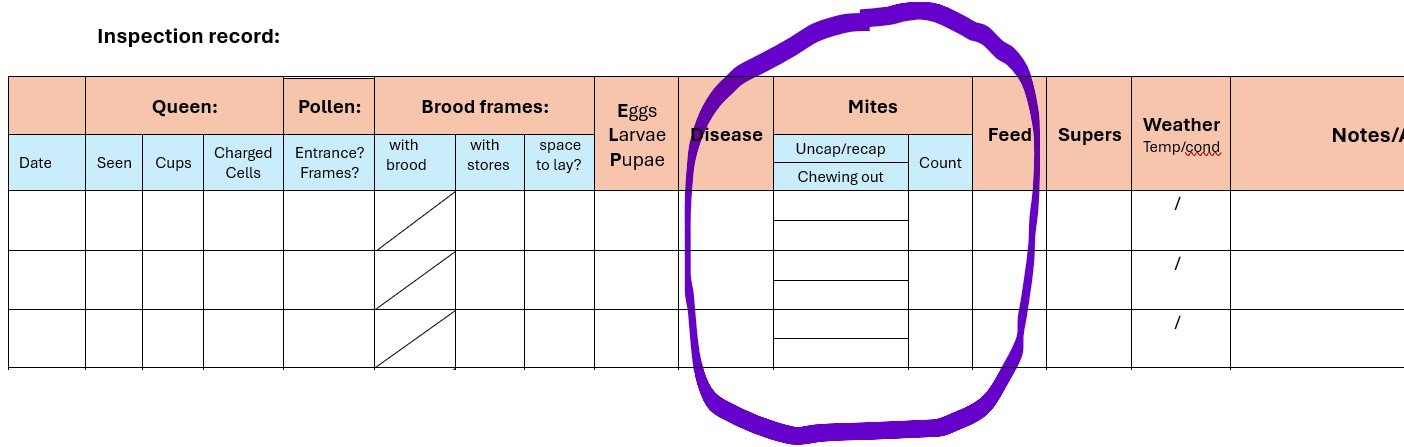
For any beekeeper hoping to transition to varroa resistance in 2026, January is an ideal time to start. Hopefully you’ll have spotted the traits in some of your colonies last season and know which colonies are candidates. For those, update your hive record card so you can keep track of performance, start counting mite drops if you’re using the varroa insert tray method, and start planning the year ahead.
Some considerations are:
- Whether you will separate the transitional colonies into a separate apiary, or at least a separate area of your apiary, so they’re not continually re-infected from neighbouring mite susceptible hives.
- Which mite count method you will use? The varroa insert tray is the one I favour because you get an indication of the population across the whole colony throughout the year. Whichever you choose, be consistent and check regularly. The mite population calculator at https://www.varroaresistant.uk/mite-calculator/ allows for different monitoring methods.
- How will you reduce your treatments? If you’re treating twice, will you initially drop to one and perhaps skip the treatment next winter if mite count numbers support that? If you’re treating just once already, will you move to every other year with enhanced monitoring?
- Will you try some biotechnical interventions like queen trapping or drone brood removal to give your bees more time to develop their resistance and give yourself more confidence?
- The key to transition is to reduce intervention and increase monitoring, but to give it time. Be prepared to step in if the mite levels require it.
You’ll find more resources to help with your transition to varroa resistant beekeeping on our website at https://bibba.com/varroa-resistance/.
There are sections there on identifying varroa resistant bees, starting on your varroa resistant journey, and breeding varroa resistant bees and you can also sign up for an email journey with useful guidance, support and tips.
Each month for the past year we have published an article detailing what’s going on in varroa resistant apiaries, explaining our observations, to help those who may be starting their varroa resistant journey. The first article was published in the February edition of BIBBA Monthly.
Varroa resistant summary for January:
- Keep checking Insert boards and trays each time you visit your hives for a winter check and heft, counting the mite drop and recording any other observations.
- As the queen starts laying again, a varroa resistant colony will start managing their varroa population in the brood nest and so pupal remains can start to appear on insert boards as early as this month as they chew out infected pupae.
- January is the month to start planning: if you already have varroa resistant colonies, which ones will you breed from, and are there others you will re-queen from the best performers? If you don’t have colonies showing the traits, can you acquire some from another local beekeeper? Many associations now have beekeepers with varroa resistant bees.
- If you’re planning to start your transition to a varroa resistant apiary this year, have you identified colonies where you saw the key traits last year and formulated a plan for reducing treatments? Have you thought about keeping your VR colonies in a separate apiary and which monitoring method you will use?