CONTENTS
- Varroa Resistant Colonies - April Update
- Early Swarms This Year
- Another Successful BBKA Spring Convention
- A Taste Of Honey - Sensory Analysis applied to Honey
- Watch the latest Live@TheHive
- Call for Articles - Have you got a story to share
Varroa Resistant Colonies
What's Happening in the Hive Now
What a difference a year makes – from last year’s wash-out spring, we’re now enjoying a spring that’s brought out the best blossom for several years and the bees are enjoying every bit of it.
In my varroa resistant apiaries, the bees are advanced, expanding their brood nests rapidly thanks to all the nectar and pollen coming in and they’re also starting to fill supers. And I’m seeing lots of uncapping and chewing out, leaving exoskeletons on the insert boards. Daily average mite counts are a touch up from where they were in March, which isn’t surprising given the big increase in the brood nest. But only a touch. My best hives are still showing a drop of fewer than one a day.
Compare the 1st picture here which is from the insert board on one of my varroa resistant hives with the 2nd picture from a mite susceptible hive in an out-apiary. Guess which one I’ll be re-queening this year?


April is the time to make final decisions about which colonies to breed or raise new stock from and which you want to re-queen, and it’s no exception for the varroa resistant apiary. It’s particularly important this year as it seems the swarm season is starting early and that provides a great opportunity to increase stocks by splitting and harvesting cells.
The colonies are also raising lots of drone brood, with some already hatched. I encourage drone production in my varroa resistant apiaries so I can flood the local area. They are taking good genetics with them. One method of encouraging drone production is to pop a super frame into your brood box and they’ll build drone comb off the bottom of it.
Any breeding program will tell you to breed from your best and re-queen your worst, and certainly breeding from your best applies in my varroa resistant apiary.
If you’ve got just one varroa resistant colony, it’s simple, multiply it using whichever method you use. Then when you have more stock, you can compare their mite drop data and levels of uncapping and chewing out and make decisions about which you continue breeding from in future years. This also provides you with a guarantee if for some reason the existing colony fails to raise a new queen after a split.
As part of the Westerham Beekeepers selection programme, I am lucky enough to have a few varroa resistant colonies and I want to continue to increase stocks this year and re-queen mite susceptible hives in other apiaries.
But which are the best colonies in a varroa resistant apiary? Varroa resistance is obviously the first trait that I select for. But is my best colony the one that does the most uncapping and chewing out? Or is it the one with the lowest mite count? Some colonies may be uncapping and chewing out more than the colony next door and yet its seasonal mite drop count is slightly higher than the neighbour.
Remember the equation you’re looking for: Uncapping (as seen at inspections) and chewing out (as seen by pupal exoskeletons on the bottom board) will equal low seasonal mite colonies (measured by regular and consistent counts on the insert board).
For the sake of an example, if I have three varroa resistant colonies, two with an annual average mite drop of three or four mites per day, and one with an annual average daily drop of seven a day, then I am not going increase from number three. I will probably increase from both the others and then continue monitoring and compare results from the resulting colonies, making the same selections next year and the year after and so on.
And what about re-queening your worst? While varroa resistant colonies are few and far between, I am not going to recommend re-queening when that queen could raise another new colony. Maybe you could come to an arrangement to pass it on to a local beekeeper? There are bound to be many who are ready to start their own varroa resistant journeys.
Varroa resistant summary for April:
- Even though there’s a flow, you should still be seeing uncapping during inspections and pupal exoskeletons on the insert board as the brood nest expands.
- Keep doing a mite drop count at every weekly inspection. The daily average may have ticked higher since March, but not by much. If you start to see a continual increase in mite drops each week, you have a problem.
- Make a decision about which varroa resistant colonies you’ll use to make increase or to re-queen other colonies. Choose the best based on mite count, and if too close to call then which is showing the best uncapping and chewing out.
- If you have only one colony, don’t risk losing it, increase numbers if only to make certain you have a colony
- Swarm season provides a great opportunity to increase stocks by splitting and harvesting excess queen cells
- Encourage drone proliferation in your varroa resistant colonies to flood the area with your drones carrying the right genetics
Every month through the season, we will publish an article detailing what’s going on in varroa resistant apiaries, explaining our observations, to help those who may be starting their varroa resistant journey.
Early Swarms This Year
Did you get caught out?
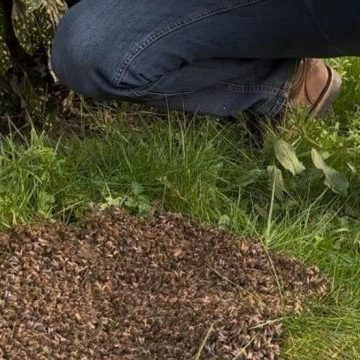
If you thought you had a few more weeks before swarm season kicked off, you’re not alone. With the unseasonably warm and settled weather this spring, bees across the UK have hit the ground running—quite literally. In fact, the first swarm collected by this author in Manchester arrived on 31st March, a full month earlier than last year's first.
Such an early start to swarming season is unusual but not entirely unexpected. The mild winter followed by consistently warm days through March has accelerated colony buildup. Brood boxes are bursting, and many queens are already well into full lay, prompting colonies to begin preparations for reproduction far earlier than the traditional mid-to-late April window.
Why So Early?
The weather has been the main driver. Across much of the UK, March brought prolonged periods of sunshine, minimal frost, and temperatures well into the mid-teens Celsius. For colonies that overwintered well, these conditions provided the perfect trigger to start expanding. Pollen has been in abundant supply thanks to early-blooming plants and trees, and nectar flows have been steady—particularly from ornamental cherry, willow, and even early oilseed rape in some regions.
A Good Omen for Beekeepers?
This early activity could signal a bumper year ahead for beekeepers. Strong, healthy colonies this early in the year mean multiple honey flows could be on the cards, provided the weather holds through the summer months. Early swarms, too, can be seen as an opportunity rather than a setback—allowing experienced beekeepers to quickly expand their apiaries, requeen weaker hives, or set up nucleus colonies for sale or insurance.
However, the speed at which the season has taken off serves as a timely reminder: regular inspections cannot wait. If you haven’t yet checked your hives thoroughly this season, now is the time. Swarm control techniques should already be in motion—whether that's providing ample space, rotating frames, or preparing for artificial swarming.
Have You Been Caught Out?
Judging by chatter in beekeeping circles and online forums, many have. Reports of swarms in March and early April are widespread this year. Whether you’re a seasoned keeper or just starting out, it’s worth asking: are your bees already one step ahead of you?
Looking Ahead
If the early promise of spring is anything to go by, 2025 could be a stellar year for British beekeepers. But as always, much depends on the coming weeks. May and June will be key months—not just for honey production, but for maintaining strong, productive colonies.
In the meantime, be on your guard for unexpected swarming and enjoy what’s shaping up to be a very fruitful season.
Happy beekeeping, and may your supers be heavy!
Another Succesful BBKA Spring Convention
by Karl Colyer
Thank you to all those members that came to visit the BIBBA stand. It was great to have a whole series of conversations about bees and beekeeping. Special thanks to those that set the stand up and were on hand to talk to the many visitors.
BIBBA also had some outreach over the weekend with various talks. On Saturday, Roger Patterson gave a well-received talk "Beekeeping - Challenge what you are told". He has a book to accompany this talk and it has been a popular investment for new and experienced beekeepers alike.
Roger also did a Sunday morning seminar "The journey to Sustainability", extolling the virtues of locally adapted bees, the native genetics and raising your own queens.
As most people can't get enough of Roger (!), he also did a Speakers Corner talk "Locally adapted bees; why are they important?"
Karl Colyer also did a Speakers Corner slot "The Nuc - an essential part of a sustainable apiary"
All the talks were very well attended and showed a lot of interest and support.
We must also mention Steve Riley who works very closely with professor Stephen Martin. There was a fascinating seminar "Transitioning to varroa treatment free". Again, this is very much a hot topic that Steve has helped bring to the fore from a practical perspective.
Each of us at the show will have had their own experiences, chats and interactions with other beekeepers and the stall holders. Many of us will be financially somewhat lighter and with a car-full of goodies to take home at the end of the day. Just a reminder that there will be a BIBBA stand at almost all the major beekeeping events so please free free to pop along for a chat if you wish.