Posts by Nick Mawby
Strategy
Strategy Statement BIBBA supports and promotes the sustainable conservation, restoration, study, selection, and improvement of honey bees that are native to the British Isles and Ireland (often referred to as the European Dark Bee or Apis mellifera mellifera).
Read MoreAppetitive floral odours prevent aggression in honeybees
Honeybees defend their colonies aggressively against intruders and release a potent alarm pheromone to recruit nestmates into defensive tasks. The effect of floral odours on this behaviour has never been studied, despite the relevance of these olfactory cues for the biology of bees. Here we use a novel assay to investigate social and olfactory cues…
Read MoreHow I select my ‘Breeder Queens’
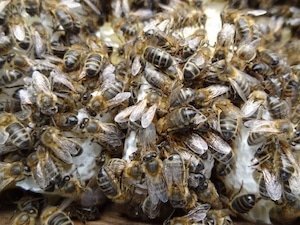
At the start of a new season I like to make a shortlist of which queens are good enough to breed from, in other words, to become my breeder queens. I do this by looking at the current condition of the colony as well as looking at the record of past performance.
Read MoreSustainable Bees & Queens
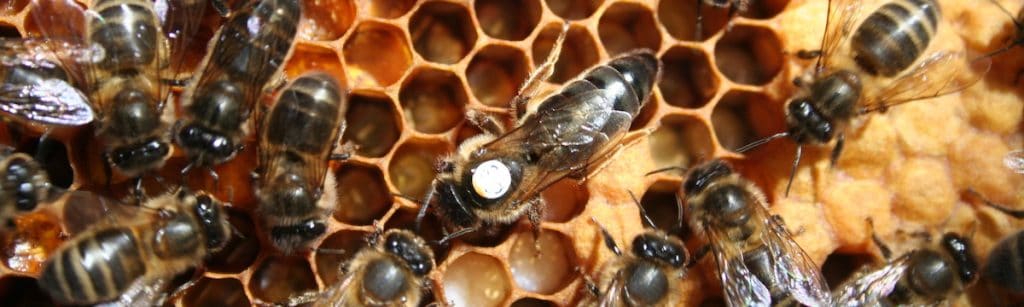
For Everyone using low-cost, simple methods:
There is growing concern amongst beekeepers of all abilities and experience about the ever-increasing importation of bees and queens. This is on several grounds, including the possibilities of introducing pests, diseases and pathogens, aggression in subsequent generations and the unsuitability to our fickle climate.
BIPCo Bee Improvement Programme for Cornwall-PL17
beekeepers who wish to conserve the Cornish Dark Honey Bee
Read MoreProtected: Group Info Private
There is no excerpt because this is a protected post.
Read MoreBIM 51 – Summer 2018
Presenters and Presentations
Please note Dylan Elen has replaced the previously publicised Per Kryger. Graham Royle has replaced Colin Pavey. The topics are different
Read MoreTolerance to Varroa destructor in Ireland
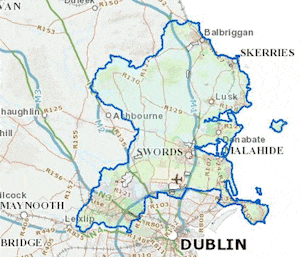
In North County Dublin, Ireland, a region that has a relatively self-contained beekeeping regime with little movement of colonies or queens into the area, tolerance (co-adaptation) to varroa mites is becoming established.
Read MoreEstimating C-lineage Introgression
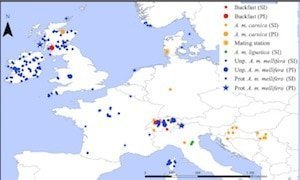
Conservation efforts for A. m. mellifera are underway in multiple European
countries requiring reliable and cost-efficient molecular tools to identify purebred colonies. Here, we developed four ancestry-informative SNP assays for high sample throughput genotyping using the iPLEX Mass Array system.