Posts by Nick Mawby
Trisha Marlow “(The) Status Quo: Rocking all over the Hive “
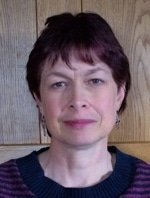
Trisha keeps around 40 colonies of locally-adapted bees on six apiaries in the Welsh Marches, breeding her own queens selectively. Some apiaries are close to ling heather, others to OSR, thus minimising the stress to man and bees of moving hives while giving a selection of honeys. With her partner Paul, Camlad Apiaries is run as…
Read MoreKeith Pierce “Apideas: Their operation and maintenance”
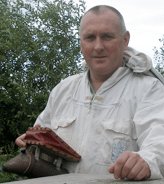
I have been beekeeping now for over 25 years, selectively rearing queens of our Dark Native Irish Bee, Apis mellifera mellifera. My selection program is based on the ability of my bees to over-winter strongly, together with disease resistance, docility, productivity, colour and more. My home and main mating apiary is just on the outskirts…
Read MorePhil Chandler “Balanced Beekeeping: Top Bars, Eco Floors and Black Bees”
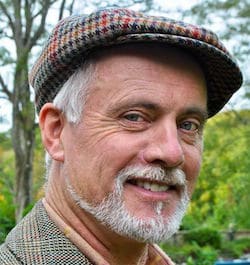
I took up beekeeping in 2000 after becoming increasingly concerned about the impact of modern agriculture on wild populations of pollinators. I started with WBC hives, but quickly became interested in more natural beekeeping systems, designing and building a number of variations of the top bar hive and experimenting with low-interference protocols. I worked at…
Read MoreEoghan Mac Giolla Coda “Producing Honey Under Difficult Conditions”
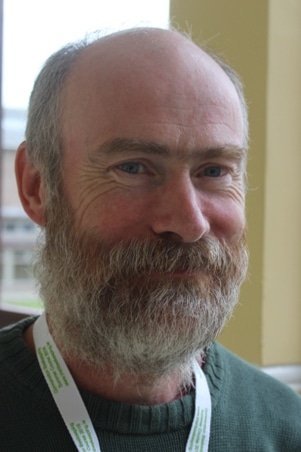
Eoghan Mac Giolla Coda is a commercial beekeeper based on Ireland’s east coast. As a fourth-generation beekeeper, he learned his craft through helping his father with the famous Galtee black bees of Co. Tipperary. After settling in Co. Louth, he embarked on his own beekeeping enterprise using local strains of native Irish honey bee. He…
Read MoreJim Ryan “Beekeeping – If the bees wrote the book”
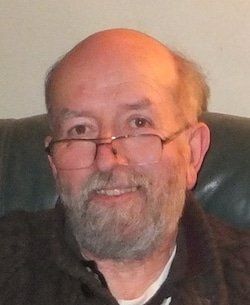
As a child I used to help my grandfather making up section crates and wiring and waxing frames. I started my real career as a beekeeper in 1983 and since then I qualified as a lecturer in 1989. I edited An Beachaire the Irish Beekeeper for 14 years retiring in 2012. I lecture at Gormanston…
Read MorePaul Cross “Development of a miniature vibration energy harvester for battery-less tracking of honey bees”
Paul keeps 15 colonies on Anglesey and runs the Bangor University apiary which is used for teaching and research purposes. He is involved in supervising a diverse range of bee-related research projects, including the evaluation of bee-keeping as a poverty alleviating tool in Uganda and Tanzania, discrimination of honey bee races in North Wales (in…
Read MorePete Sutcliffe – “The hive as a processing centre”
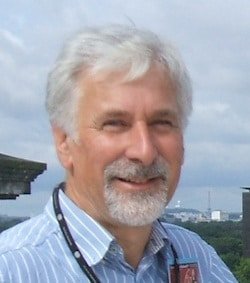
Pete Sutcliffe has been keeping bees for over thirty years now, having started out with two home-made WBCs inherited from his father. He now works in a beekeeping team with his wife: together they keep an average of 20 colonies on various sites in the Dane Valley in Cheshire. Following his retirement, Pete put himself…
Read MoreThe health and status of the feral honeybee population of the UK
abstract of thesis Catherine Eleanor Thompson:
While declines in managed honeybee colonies are well documented, little is known about the health and status of feral honeybee populations. To date no studies have considered the wider pathogen burden in feral colonies, whether they represent a genetically distinct population, a remnant native population or a unique source of genetic resistance.
Read MoreSteve Rose “My Approach to Bee Selection”
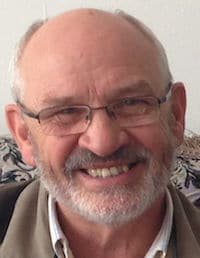
Steve keeps around 40 colonies on high ground in North Wales with Snowdonia to the West and the Berwyn mountains to the East. He finds that for bees to thrive in his locality they have to be particularly well adapted. He thus heads a breeding group which selects for native traits that are typical of…
Read MoreJim Pearson “Myths, Legends and Lies”
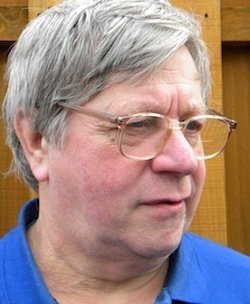
Jim Pearson is a member of the Wakefield and Pontefract branch of the Yorkshire BKA. He is a practical beekeeper who applies science where required and where he sees the relevance to his beekeeping. As a progressive beekeeper he is always trying to understand bees more and in doing so he has discovered that some…
Read More