Native Irish Honey Bee Society
Conference 6th and 7th March 2026 at Athlone
The conference is always good value, with a good range of speakers this year. It is always well attended and there are some very good beekeepers in Ireland who are always willing to chat to you. Early bird discounts end 20th February
Dublin Airport is accessible from many regional airports, so it’s easy to get to.
Details here https://nihbs.org/2025/12/04/nihbs-conference-2026/
An undeniable pleasure in beekeeping is handling a good colony of bees headed by a queen that you have raised yourself. Some beekeepers, unfortunately are deterred from queen rearing considering the procedures too complex. The following is an easy to manage method of getting from a selected larva to a ripe queen cell.
The method is a development from a lecture and demonstration given by Dave Wilkinson, NBU apiary manager. The concept derives from a practice used by French royal jelly producers when employing queen right colonies. Giles Fert and Harry Laidlaw describe very similar manipulations for royal jelly production and (queen) cell finishing.
The major advantage of the method is that it is a mere incidental manipulation of the colony chosen to start and finish the queen cells - any production colony is suitable so:
- There is no need to create a body of queenless bees which is inherently unstable.
- The cell raising colony is free to forage as before. Its potential honey yield is not effected.
- If using a "queen rearing" kit to obtain the royal larvae and things go awry, there is no unnecessary disruption to what was to have been the cell raising colony.
- The same colony can be used to provide the larvae and then rear them onto queen cells if so desired.
The French royal jelly producers use a double brood chamber with the queen excluder between the two brood chambers, the queen confined to the lower box. At each routine inspection frames of sealed brood are taken and placed above the excluder and once emerged the empty frames are put below again for the queen to lay in. When producing royal jelly the upper box is arranged with a frame feeder against the hive wall followed by a pollen frame, young open brood, the frame of queen cells, open brood and sealed brood thereafter. The royal jelly is harvested 3 - 3½ days after the "grafts" were introduced.
Most Irish beekeepers use a single brood chamber or a 1½, so we could not readily copy the French. Another consideration is that differences in behaviour between bee races appear to be most marked when queen rearing. The use of a feeder when rearing queens may not be essential with our black bees, but I now advise using a frame feeder (this will require narrower dummies)
The critical factors with this system are having most, if not all of a colony's pollen, young larvae and the "royal" cells altogether above a queen excluder.
With our black bees there is the need to "familiarise" components before use so 2 to 24hrs before the introduction of the "royal" larvae, the two multiframe dummies, a spare empty brood chamber, three spare brood frames (preferably of drawn comb) and the cell bar frame are taken to the chosen production colony. This now becomes the cell raiser.
Two multiframe dummies are made so as to occupy all of a brood chamber bar a space for four frames. (Five if a frame feeder is needed) For ease of manipulation two 3/8" short bars can be placed on one side of each dummy so that they match the position of a Hoffman frame's wings. These spacers go against the brood chamber wall to give an all round bee space.
The function of these dummies is merely to fill up space and as their sojourn in a hive is for a mere 10 to 11 days at a stretch they do not necessarily have to be made to precise dimensions or joiners' standards. It is of course essential that they fit into a brood chamber and once in don't project out!

The spare brood chamber is to be placed above the queen excluder and below the supers with the dummies one on each side. The empty "cell bar" frame is put into the four (or five with a feeder) frame space having been painted with syrup. This the bees will clean off and thereby "familiarise" the frame in readiness for use.
The three spare frames can either be inserted in the space left for later rearrangement when the royal larvae are introduced or they replace two frames of pollen and one frame of young larvae removed from the full brood chamber of the rearing colony there and then It is not necessary to find the queen of the production colony. To ensure she is below the excluder merely shake the frames free of bees on removal. Worker bees will quickly come up through the excluder to recover the frames.
The box with the dummies is set up to have a dummy, a frame of pollen, the frame of young larvae, the "cell bar" frame, a frame of pollen and a dummy. The cell bar frame should be next to the better/fuller pollen frame. This sequence must prevail when the royal larvae are introduced and then queen cells will be drawn.
The raising of queen cells in such a situation is observed in practice. The precise mechanism which permits this is not fully understood. There is some indication that the building of queen cells is inhibited by the secretions of the queen's Amhart glands, which are found in the last tarsal segments, this is called "foot print" pheromone. The queen excluder of course prevents the queen access to the cell bar frame so no foot print pheromone is present there.
Once the queen cells are sealed the raising colony does not swarm. This is also seen in traditional queen right cell finishing colonies. The queen cells are treated in a like manner to supercedure cells although the governing factors may not be identical.
My practise is to leave the hive stack arrangement unchanged until the queen cells are ready for transfer to mating nucs eleven days on (fifteen days after the egg was laid) If desired the brood chamber with the queen cells could be placed higher up the stack once the queen cells had been started.
Normal routine inspections of the full brood chamber should continue and the three full frames in the "cell rearing" box should be examined in case a queen cell has been raised on an older larva than those provided. If allowed to hatch such a queen would kill her younger rivals - the ones you want - and add a complication with a free virgin above and a laying queen below the queen excluder.
Once the queen cells are capped it is as well to protect them in "hair curler cages" when they are to be left in the hive until maturity. When using an incubator at 34.5 degrees C to bring the cells to maturity, once the cells are removed the pollen frames can be refreshed from a surrogate colony, a fresh frame of young brood brought up and the process repeated. This allows for the production of large numbers of queens from the same rearer colony and can go on for as long as the season permits.
The production colony goes on functioning as before. The given cells are in a position where the house bees must pass by and the royal jelly producers come to, to get the pollen necessary in their diet. The dummies are a physical presence which concentrates the young bees into the surrounds of the cell bar frame. The net result is a good acceptance and the building of fine queen cells.
Doolittle raised his queen cells above an excluder of a queen right colony. Some breeders and/or authors decry queen raising in a queen right colony. Consider however that is how the bees do it!
Little is written about "queen right" cell raising and that might be because it does not suit the large volume queen producers whose methods we tend to emulate. When using a "cell bar" frame carrying 20 grafts my success rate has been better in this queen right configuration as compared with a queenless cell raiser.
This method does not have boxes "boiling" with bees as standard texts recommend, it is after all a production colony with ample space provided. Lui showed that it only requires 200 workers of the correct age to raise a fully formed queen. Any reasonable production colony would have many such bees, certainly plenty to raise sufficient queen cells for the run of beekeepers in these islands.
When I've been asked about failures it is commonly due to a lack of familiarisation of the cell bar frame. A first timer was told this nicely by the bees who removed the grafts but then drew two queen cells of the frame of young larvae.
In summary if a production colony's pollen supply, a frame of young brood and a frame of "grafts" are placed above the queen excluder and below the supers the larvae in queen cups will be reared on to queens. When using a single brood chamber the incorporation of multi frame dummies in a second brood chamber above the queen excluder gives the right environment for raising queen cells without any significant extension of the brood chamber and also this configuration does not adversely effect that colony's potential honey yield.
Originally published by BIBBA in Spring 2001 issue of
Bee Improvement Magazine No 9
and updated by Ben Harden in February 2026
South Staffordshire Beekeepers
have a version of this method as a pdf here

Ben Harden
I was reared in Kenya and kept strictly away from bees as a child and young adult as my mother and older sister had been severely stung when in the vicinity of two absconding colonies which crossed paths and went into battle. Finally settling in Ireland I got my first bees in 1975 which were in the final stages of collapse with AFB. What I observed did not quite tally with the text books which all quoted the same source so I got hold of the source papers which has lead me to be sceptical of aspects of book accounts which seem to be old timers assumptions. What you observe is more important than what you read.
It took 18years to pluck up the courage to do the preliminary exam then on the basis that once a stubborn horse starts moving don't stop it I went on to the NDB.
Bibliography
Doolittle G.M. 1915 Scientific Queen Rearing
Fert G. 2000 Beekeepers Quarterly 63:26-32
Laidlaw H. 1992 The Hive and the Honey Bee. Chapter 23.
Laidlaw H. and Eckert J.E. 1962 Queen Rearing.
Lui, Yin-Shin, Jay S.C. 1975 Canadian Entomologist. 107:705-709
Winston M.L. 1987 The Biology of the Honey Bee.
Based on: Biedermann et al., 2019 – Phase III trial of birch-pollen SLIT-tablet

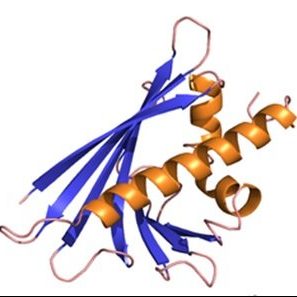
Birch Pollen Allergen Bet V1 (from Wikipedia)
Why a Clinical Allergy Trial Matters to Beekeepers
Although the attached paper is a medical study—testing a birch-pollen immunotherapy tablet—it contains valuable ecological and botanical information about birch pollen, related tree species, and pollen abundance. These findings help us understand:
- How birch trees behave as pollen sources
- The timing and scale of birch pollen production
- Cross-reactivity within birch-related trees (alder, hazel, hornbeam, oak)
- Whether birch pollen has attributes that could influence bees, forage, or apiary siting
The paper is not about bees, but its detailed pollen data (timing, intensity, season length) and species relationships provide useful context for assessing whether birch trees are beneficial companions for apiaries.
by the Scientific & Technical Working Group: Karl Colyer and Paul Verrier
What the Paper Shows About Birch and Its Relatives
The study revolves around the birch-homologous group of trees which all include the highly allergenic Bet V1 protein in their pollen.
The paper states clearly on page 2:
- The birch group includes birch, alder, hazel, hornbeam, and oak.
- These trees have similar Bet V1 allergens, with highly related protein sequences and strong biological cross-reactivity.
While this is framed in the context of human allergy, it also tells us that these trees share evolutionary, biochemical and seasonal characteristics—relevant when considering their value as early forage for bees.
Birch pollen season characteristics
The trial provides unusually precise pollen data (page 4):
- Birch pollen season length averaged 24 days, ranging from 10–42.
- Daily birch pollen counts averaged 284 grains/m³, with peaks up to nearly 800.
- Alder and hazel seasons precede birch but do not fully overlap.
This confirms birch is a high-volume pollen source in early spring—something important for brood development.
Is Birch a Valuable Forage Tree for Honey Bees?
Pollen value
Birch is wind-pollinated, not insect-pollinated. This means:
- It produces large quantities of pollen
- The pollen is readily accessible to bees
- Birch provides pollen very early in the season, when colonies need protein for brood rearing
Bees are known to forage on birch pollen opportunistically. It is not their absolute favourite compared with willow, hazel or early herbaceous species, but they will use it when available—especially during pollen scarcity.
Nutritional considerations
Birch pollen is moderate to good in terms of protein, and, critically, available in abundance when few other trees are producing. In areas lacking willow, or in cold springs, birch may play a supporting role in sustaining brood build-up.
Seasonal stagger with other species
Because hazel and alder typically release pollen before birch, and oaks follow later, planting or working near these species creates a progressive tree pollen sequence:
Hazel → Alder → Birch → Oak
This can give colonies several weeks of continuous pollen flow—a major advantage in early spring.
Does Birch Pose Any Drawbacks for Apiaries?
1. Human allergy concerns
The paper demonstrates that birch pollen is one of the most potent aeroallergens in Europe. (page 2: sensitisation in Europe ~24%; alder 21%, hazel 23%).
However, keeping hives near birch does not increase pollen exposure to nearby people, because bees do not spread birch pollen; birch is wind-pollinated.
The clinical trial confirms birch is allergenic to humans—not that it is problematic for bees.
2. Nectar value
Birch provides little to no nectar, so it will not support honey production. Its usefulness is mainly as an early pollen source and for ecological diversity.
Would BIBBA Members Benefit from Placing Hives Near Birch Trees?
Benefits
- Reliable early-season pollen source
Birch produces abundant pollen during a critical period for colony expansion. High pollen counts documented in the paper (page 4) confirm its productivity. - Complements other native tree species
Birch fits neatly within the early forage calendar alongside hazel, alder and willow. - Supports native bee ecotypes
The Amm-type colonies traditionally handled by BIBBA members tend to build up early and steadily. Access to a sustained pollen flow is valuable for these genetics. - Landscape-scale benefits
Birch is a pioneer species, supports biodiversity, and thrives in marginal soils—making it well-suited to environmental improvement work alongside beekeeping.
Limitations
- Birch alone will not sustain colonies; its pollen is helpful nutritionally but not exceptional.
- It lacks nectar, so it cannot replace willow or early-flowering shrubs.
Final Conclusion
Yes—it is beneficial to keep hives near birch trees, particularly when integrated into a diverse spring forage landscape.
The attached paper provides strong evidence that:
- Birch is a prolific source of early-season pollen
- It forms part of a cluster of trees with staggered but overlapping pollen seasons
- Its pollen production levels are high and seasonally reliable
- There are noadverse implications for bees or apiary management
Therefore, BIBBA members can confidently treat birch as a useful complementary forage tree, especially where willow or hazel are limited. While birch is not the best spring tree in isolation, its combination of abundance, timing, and ecological resilience makes it a valuable asset in landscapes that support sustainable, locally-adapted beekeeping
Notes from the BIBBA Scientific & Technical Team
- It is a pity they did not publish the pollen counts of the other related species. Yes, the species overlap in production and if you are in an area that is good and damp, then you may well get all these growing and delivering pollen in sequence. Yes, it is good to locate colonies near these.
- Similar wet areas also frequently give rise to the pendulous sedge (Carex spp) which provides huge pollen loads in early spring and is another opportunistic source for honeybees.
- Oak is now being frequently planted around the edges when woodlands are cleared out and is also a good source of pollen.
- In terms of it being safe to put bees by all these trees - yes as long as the beekeeper does not suffer from the allergens in the pollens.