Pete Sutcliffe – “The hive as a processing centre”
Pete Sutcliffe has been keeping bees for over thirty years now, having started out with two home-made WBCs inherited from his father. He now works in a beekeeping team with his wife: together they keep an average of 20 colonies on various sites in the Dane Valley in Cheshire. Following his retirement, Pete put himself…
Read MoreThe health and status of the feral honeybee population of the UK
abstract of thesis Catherine Eleanor Thompson:
While declines in managed honeybee colonies are well documented, little is known about the health and status of feral honeybee populations. To date no studies have considered the wider pathogen burden in feral colonies, whether they represent a genetically distinct population, a remnant native population or a unique source of genetic resistance.
Read MoreSteve Rose “My Approach to Bee Selection”
Steve keeps around 40 colonies on high ground in North Wales with Snowdonia to the West and the Berwyn mountains to the East. He finds that for bees to thrive in his locality they have to be particularly well adapted. He thus heads a breeding group which selects for native traits that are typical of…
Read MoreJim Pearson “Myths, Legends and Lies”
Jim Pearson is a member of the Wakefield and Pontefract branch of the Yorkshire BKA. He is a practical beekeeper who applies science where required and where he sees the relevance to his beekeeping. As a progressive beekeeper he is always trying to understand bees more and in doing so he has discovered that some…
Read MorePhilip Denwood “Towards a History of the Dark Bee in Britain”
Philip has been keeping bees in the Chiltern area since 1971, and was attracted to BIBBA by seeing the publications on display at the National Honey Show in 1972. He served on the BIBBA Committee for many years. After Beowulf Cooper’s death he collected his published and unpublished writings and from them compiled “The Honeybees…
Read MoreHuw Evans “Electronic monitoring as a tool for better beekeeping and queen breeding”
With a consuming interest in engineering and innovation since a young age, Huw obtained a First Class Honour’s degree in Electronic Engineering and PhD in Microwave Engineering. A keen beekeeper for over 15 years now, Huw has a passion for finding out what bees are doing while undisturbed. As a result, Huw is the managing…
Read MoreJo Widdicombe “The Principles and Practice of Bee Improvement”
Jo has been a member of BIBBA for nearly 30 years and serves on the BIBBA Committee. He was a Bee Inspector for 5 years and now runs over 100 colonies in Cornwall. Author of the book, ‘The Principles of Bee Improvement’. Lecture Title: “The Principles and Practice of Bee Improvement” A practical approach to…
Read MoreTony Maggs “Bee Farming with Native/Near Native Bees”
After pestering a friend of the family for many years, who was an experienced beekeeper in the Nottinghamshire Beekeepers Association, he eventually helped me to start beekeeping by taking me with him to hive a swarm. This mentor turned out to be a keen member of BIBBA, so pointed me the right direction. After five…
Read MoreMike Saunders “A current attempt to recover Apis mellifera mellifera from mongrelised stocks in the Welsh Borders”
Professional engineer. Keeping bees since 2006. Helped two very experienced beekeepers for 2 years trying to improve bees by small-scale rearing of first-cross Carniolan queens. In 2009 switched to using “nearish-native” native bees, and since then has been studying the native bee and the science of bee breeding. In 2010 started a local Group using…
Read MoreMargaret Murdin “Bee Genetics Explained” – “Understanding the Queen”
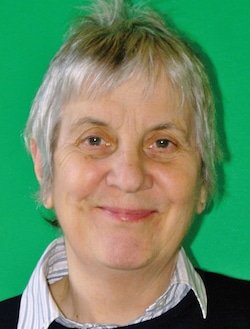
Margaret has been keeping bees for about 12 years and is a practical beekeeper who learnt her skills as a member of the Ormskirk and Croston Branch of the Lancashire Association. She is a member of BIBBA and keeps bees that are well adapted to the local area. She currently has 20 colonies across 3…
Read More