BIBBA Monthly Newsletter
June 2025
CONTENTS
- Varroa Resistant Colonies - June Update
- Standing together for the Native Honey Bee
- What's in a name? The Case for the Dark European Honey Bee
- Live@TheHive - catch the latest episode
- CaSCA - What is it and how can you get involved?
- Volunteers Wanted for Video Editing
Varroa Resistant Colonies
The heritability of varroa resistant traits
Conditions for queen raising have been ideal in the southeast of England so far this year, with lots of pollen and nectar in the hives to produce copious Royal Jelly, drones in abundance and long spells of good weather for virgin queens to get out and well mated.
That’s allowed me to get ahead of my initial queen breeding plan for this year, and I am increasing stocks from my best varroa resistant colonies as well as re-queening my mite breeding colonies – those that couldn’t survive without my intervention to control varroa.
Nearly all these new queens have come from naturally-produced swarm cells – I harvest all but one and hatch the other queens in an incubator before introducing them to two- or three-frame nucs or mini-mating nucs for mating.
I am always a little apprehensive as to whether the colonies headed by my new daughter queens will show the same level of varroa resistance as the mother colony. The team at varroaresistant.uk have shown that varroa resistance is transmitted via the queens and that there’s a strong heritability down queen lines, so the scientific evidence is building.
But in an open mating situation where queens are likely to mate with drones from mite-breeding colonies, could the genetics be diluted or even switched off for subsequent generations? It’s why I am so keen on flooding the area around queen mating apiaries with drones from varroa resistant colonies and why it’s beneficial to work with other local beekeepers so they are hopefully doing the same too.
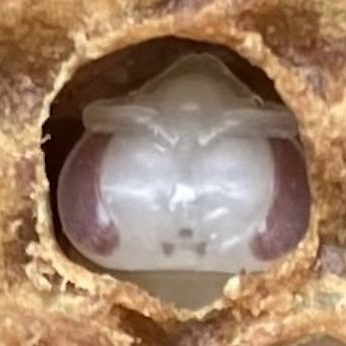

So far, my own observations support the science. All the daughter queen colonies are starting to uncap cells and chew out infected pupae. Whether they are as effective as the mothers will only become clear over the course of a season, and so I will be regularly recording observations of uncapping, chewing out (as evidenced by exoskeleton parts of the insert board) and daily mite drop counts for the new colony as I do for the mother colonies.
I have learnt to be patient to observe the first uncapping in colonies headed by the new queens as this may not become evident until the new queen’s second brood cycle. Initial frames of capped worker brood show little signs of uncapping, even during the June gap where colonies can be focusing on hygiene rather than processing incoming nectar
My mating nucs have a lot of fresh and clean comb of course. And if queens are introduced to established hives, then it will take time for her offspring to become the dominant force of workers In the hive. But by the second brood cycle, the uncapping and chewing out re-starts, in every case so far.

In terms of mite counts over the past month, my best colonies have a daily mite drop of fewer than one a day, others around two to three a day. When I have done an artificial swarm split, the re-queening hive shows a slight uptick in drop - to one or two a day in the best colonies and up to five a day in others - as the last of the old queen’s brood hatches and the mites have nowhere to go. Then the mite counts fall and I see virtually no mites on the insert board until the new queen’s first cycle of brood starts to hatch.
The main flow is now starting in my apiaries, with nectar starting to drip from frames as you turn to inspect them. That could prompt a lower level of uncapping and chewing out as the bees focus on processing the incoming nectar. I’ll report my observations in next month’s report.
Varroa resistant summary for June:
- Daughter queens from varroa resistant stock show strong heritability of the varroa resistant genes despite open mating.
- You may have to wait until the second brood cycle to see uncapping and chewing out in colonies headed by newly mated queens from varroa resistant stock.
- There may be an increase in mite drop numbers going into a brood break caused by a split or swarm, but this quickly fades as the colony re-queens. It’s important to continue doing a mite drop count even though you may not be inspecting while the new queen emerges and gets mated.
- Encourage drone proliferation in your varroa resistant colonies to flood the area with your drones carrying the right genetics
Every month through the season, we will publish an article detailing what’s going on in varroa resistant apiaries, explaining our observations, to help those who may be starting their varroa resistant journey.
Standing Together for the Native Honey Bee
BIBBA are members of two European Beekeeping Associations. SICAMM and the European Beekeeping Association (EBA), both of which we are founding members of.
SICAMM has evolved from a very loose organisation that was started 30 years ago, with no membership as such, into a more formal and structured organisation. It is concerned with the native bee (Apis mellifera mellifera) of Northern Europe, but recognises the hybridisation that many beekeepers experience, so accepts local adaptation.
The European Beekeeping Association (EBA) has only been in existence a couple of years, but has achieved a lot. There are 55 beekeeping associations in 30 countries with over 400,000 members. Although many are EU based, there is much of relevance to BIBBA members. I think the newsletter is brilliant, the latest issue is here. Although a lot of reading, so most will be selective, there are some interesting articles, that I’m sure we can all benefit from.

What’s in a Name? The Case for the Dark European Honey Bee
In the last 20 years or so, beekeeping terminology has changed, I believe because of the great influx of new beekeepers, who weren’t aware of the long-standing terms that all beekeepers once knew. An example is “Uniting”, that has been used for many years and has become “combining”, “merging”, “amalgamating”, “joining” or whatever else comes to mind.
The reason I mention this is because of the common name of our native bee (Apis mellifera mellifera). Throughout the natural range it has many local names, mainly based on location and colour, usually “black”, “brown” or “dark”, but it’s the same bee, although some may not know that. I don’t know the history, but I suspect as an attempt to regularise the common name, several others have been used, including “Dark European Bee”, “Dark European Honey Bee” and “European Dark Bee”. Several years ago, for presentations and writing and in the absence of commonality, I decided to use one of these, but which one? I decided to use what SICAMM used, as they were the one organisation that covered the whole Amm range, so I use “Dark European Honey Bee”. I recently checked the website of the “new SICAMM”, to find “SICAMM is the International Association of the European Dark Bee and its primary goals are to conserve, protect and promote the dark European honeybee.” I was confused.
BIBBA member, Dorian Pritchard, has a long association with SICAMM and has recently had a book published “Genetic Priorities for Conservation of Native Honey Bees”, so I asked his view. His reply was “I have been looking through my books to see what others have done. Adrian Waring, in "Better Beginnings for Beekeepers" uses both, "the Dark European Honey Bee" in relation to the book of that title by Ruttner, Milner and Dews. I knew Eric Milner and John Dews and know that both were sticklers for correctness. So I would go for that.
Linguistically, to me, the name "European Dark Bee" implies there are several dark bees and we are concerned only with the European one, or that there is only one European bee and that one is dark. On the other hand "The Dark European Bee" perhaps implies there are several European bees of various shades and our particular concern is with the dark one.
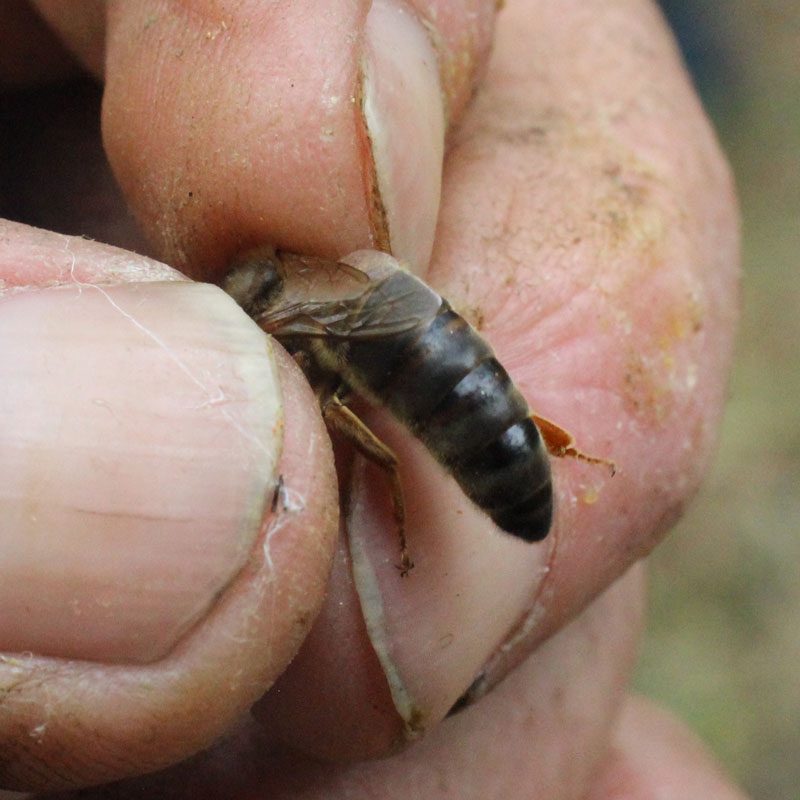
So from both approaches, I would go for
"The Dark European
Honey Bee"
Roger Patterson
I emailed SICAMM President, John Greenaway raising the point, writing “All I will say is that I think it should be “Honey Bee”, not “Bee”, as in NIHBS and SNHBS titles, to avoid confusion with any other bumblebees or solitary bees. I think it will help when in discussion with authorities anyway.
I don’t mind what it’s called, providing we all use the same name and are encouraged to do so. Now SICAMM is more formalised, I believe they should take the lead. I prefer “Dark European Honey Bee”, as that covers Dorian’s point and distinguishes between bee types.”
John’s reply was “……..it's an important point. We have tended to use terms used by other Sicamm associations. Let me take counsel and come back to you. I agree about the leadership and thanks for pointing out the challenge”
As I state in my email, I hope we can all standardise on “Dark European Honey Bee”, but others may have different views.
Live@TheHive
In the episode of 2nd June, Roger got surprised by a colony that was close to being spiteful, view here
This is very unusual for his bees. When being taken for a walk by three border collies the next morning, he remembered the history of that hive. It was an incoming swarm late in 2024. They were yellowish Buckfast type, needing more smoke than he normally uses, but weren’t very bad. This year he planned to remove the queen and use it for raising a batch of queen cells, but didn’t get round to it and was a shade late anyway. He found emerging cells, so pulled a few and let them get on with it.
At the previous session, Martina had to move away when videoing because she was getting stung. Now it's clear where they came from. This shows what can happen, even to those who are careful with their selecting. Roger has no proof they were derived from imports, but he has strong suspicions they were.
Steve McGrath quickly put a note on the recording to explain.

CaSCA (Commercial and Semi-Commercial Apiarists)
BIBBA started CaSCA with the aim of helping the many members, whatever their scale, who sell hive products. We also encourage BIBBA members to produce locally adapted bees and queens for their own use and for sale, that will not only provide income, but will help reduce the need for imports. We feel that exciting times are ahead.
After a promising start CaSCA stagnated owing to illness and lack of time. Kevin Thorn has agreed to help with much of the organising, so we are now able to move forward. The rationale behind this purpose is as follows:
There are many beekeepers who want to progress from small-scale beekeeping to selling hive products, or have already done so. They will probably have one or more established outlets, even if only their own, perhaps selling at work or the garden gate. If beekeepers are selling something on a regular basis, it is reasonable to consider them to be commercial to varying degrees. Although definition is difficult, those with a lower volume of sales, perhaps trying to make the hobby pay, or to augment their income, are considered semi-commercial, the higher volumes are commercial.
When the number of colonies increases, attitudes and methods must change, with a need to be more efficient, which isn’t always appreciated by those who only know the methods they have been taught that may suit small-scale beekeepers. When increasing from, say, 5 hives to 10, 20, 50 or more, it isn’t simply a case of doing the same things more times, as other methods need to be developed that reduce time and cost. In addition, when selling some hive products, you may be subject to regulations. To increase the size of a beekeeping operation, there is a lot of learning to do, that is made easier if there is a source of help, which is why BIBBA introduced CaSCA, that is an acronym for “Commercial and Semi-Commercial Apiarists”. It is simply a group of BIBBA members in the semi-commercial and commercial category. It is not a separate organisation, but a special interest group within BIBBA that is for those selling products from their own bees.
There are many commercial and semi-commercial beekeepers in BIBBA, some experienced, others less so. We therefore feel that BIBBA is well placed to help and provide a home for those in this significant and important group of beekeepers.
The CaSCA sub-committee members, with a wealth of experience between them are:-
Kevin Thorn, with about 80 colonies in Suffolk, producing honey and cosmetics
Gareth Trehearn keeps 150 colonies in the Manchester area.
Karl Colyer currently has approaching 100 colonies, selling honey, producing nucs and rescuing free-living colonies.
Peter Jenkins has kept bees for 60 years in marginal West Wales, running 80 colonies in Dadant hives for honey production.
Roger Patterson started beekeeping over 60 years ago in West Sussex. At one time having 130 colonies, now around 40, producing honey and nucs.
What can BIBBA offer and achieve? This will depend on the needs and input of the members. We hope to help beekeepers be efficient and offer new opportunities. There have been webinars and winter one-day courses. We are planning to repeat both, in addition to summer one-day courses held in various locations.
Although not organised yet, we are investigating a CaSCA forum, where questions can be posted and answered.
CaSCA is open to all BIBBA members, but to receive correspondence, including notification of events, you need to register as a CaSCA member. To register visit the CaSCA page on the website.
Call for Volunteers: Video Editing
Do you have basic video editing skills, or an interest in video editing, and can spare a little time to help BIBBA optimize its videos? We are looking for volunteer members who might be able to do some basic video editing, including time stamping, cutting, and adding cards and stills.
Our videos get thousands or even tens of thousands of views each and are a key part of our mission to help educate beekeepers of all levels, but we need some extra help to ensure that they are as impactful and reach as wide an audience as possible. If you have the skills already then you'll be ready to go, but if you have an interest then training can be provided! Please let us know if you are interested at .

Bees for Sale? Looking to Buy?
BIBBA is encouraging members to raise extra queens and nucs-ideally for local sale-to help reduce the demand for imported stock. Supporting local bees is key to improving resilience, adaptation, and sustainability in our beekeeping.
If you have bees for sale, or are looking to purchase from fellow members, head over to our dedicated page at bibba.com/bees-for-sale to see what's available.
Please note: While BIBBA cannot currently inspect or vouch for queens and nucs listed, all sellers are required to agree to the following statement:
"I confirm that my queens are raised from local stock and are not imports, and that I support the objects of BIBBA."
The primary aim of BIBBA is the conservation, restoration, study, selection, and improvement-for the public benefit-of the native honey bee of Britain and Ireland (Apis mellifera mellifera), as well as near-native and locally adapted honey bees.
Let's work together to strengthen our bees, locally and sustainably.
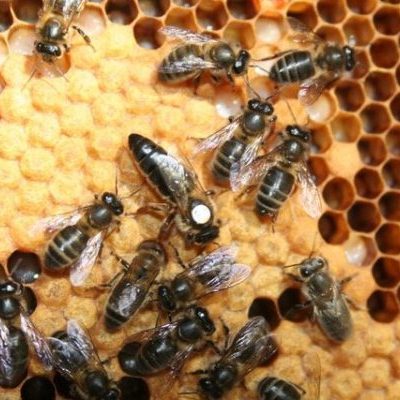
BIBBA supports the banning of honey bees imports.
At a recent BIBBA trustees meeting it was agreed to support a ban on honey bee importation as policy. This is in response to the known threat of tropilaelaps being introduced to our shores via bees from Europe. Although BIBBA has previously not supported an outright ban for some time, this increasing threat leads us to adopt a stronger position for the good of the craft, the bees and our members.
The opinions expressed in articles in BM are those of the authors and do not necessarily reflect those of the BIBBA Board. While the editorial team considers all material received carefully before publishing, it does not disbar those who may have a perfectly good argument.