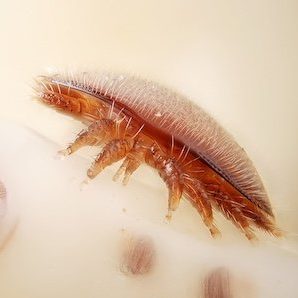
A winter of beekeeping tips and tricks on YouTube
We have been busy filming lots of material in apiaries over the summer and will be releasing a series of educational videos on the BIBBA YouTube channel over the winter months.
The latest video is very topical as it covers hefting your hives to check levels of stores over winter.
Why not subscribe to our channel? You can set to be notified when we release new videos, or browse our playlists which we’ve divided into key areas including ‘Beekeeping for Beginners’, ‘Bee improvement’, ‘Queen rearing and bee breeding’ and ‘Practical Beekeeping’.
Subscribe Here:

From hobby to business:
grow your beekeeping, grow your income
It’s bonfire night, and in my small part of the southeast of England we have yet to experience a ground frost. That’s the latest that I can remember. Some colonies are still finding pollen, which bodes well for the re-start of egg laying in January, and there was definitely a strong ivy flow, which may prove to be a blessing or a curse (Roger Patterson explains why here: https://youtu.be/qwqS_v9Q3OU).
Although recent temperatures, at 15 degrees or more some days, would have allowed me to go into the hives, there is now reason for me to do so. I’d rather leave the protective propolis envelope intact and not needlessly disturb the bees. I can tell all I need to know over winter by examining the insert trays each time I go to check and heft the hives.
I leave my insert boards and trays in place all year round, allowing me to do varroa mite counts and record evidence of pupal parts as varroa resistant bees chew out infected pupae whatever the season. During winter, it also tells me what else is going on inside the hives and ensures there are no cold drafts from underneath.
I checked in on some of my apiaries today and here’s what I learned from the bottom boards:
- Daily varroa mite drops in my best performing colonies average fewer than one a day, and only slightly more in most others. These are very low counts for the time of year.
- There was a burst of brood during the ivy flow but that is now petering out. During this brood period, bees were chewing out varroa infected pupae as evidenced by pupal parts among the brood capping debris.
- Some colonies have moved on to their stores as evidenced by lines of white wax cappings on the insert boards towards the sides of the brood box, although hives are still hefting heavy.
Without opening the hives, I know what the colonies have been up to, where the cluster is positioned, and I know that they continue to control their varroa populations. To do an accurate mite count and look among the debris in more detail, I take a photo of the insert tray (slugs and all) with my phone and then I can blow it up and look at sections once I’m in the warmth.

If you weren’t able to visit the BIBBA stand at the National Honey Show, then we have released a new video to help beekeepers identify the signs of the key varroa resistant traits of uncapping worker brood and chewing out infected pupae. This shows examples of pupal parts on bottom boards. You can watch the video here: https://youtu.be/JjQjKI_jl5I.

It was fantastic to meet so many beekeepers at the show who are starting out on their varroa resistant journeys and more who are some way down it. There has been a complete change in attitudes and understanding over the past couple of years. BIBBA and the team at www.varroaresistant.uk will continue to provide resources to help you on your own journey. If you haven’t already, you can sign up for a supportive email journey at https://bibba.com/varroa-resistance/.
If you have read previous varroa resistant articles in BIBBA Monthly, you’ll know that in the summer I re-queened several ‘mite breeder’ colonies that weren’t varroa resistant with new queens from varroa resistant queen lines. I observed that uncapping and chewing out, which had previously been absent, started as soon as the new queen’s offspring became dominant in the hive. Average daily mite drops, which had been constantly increasing, levelled off.
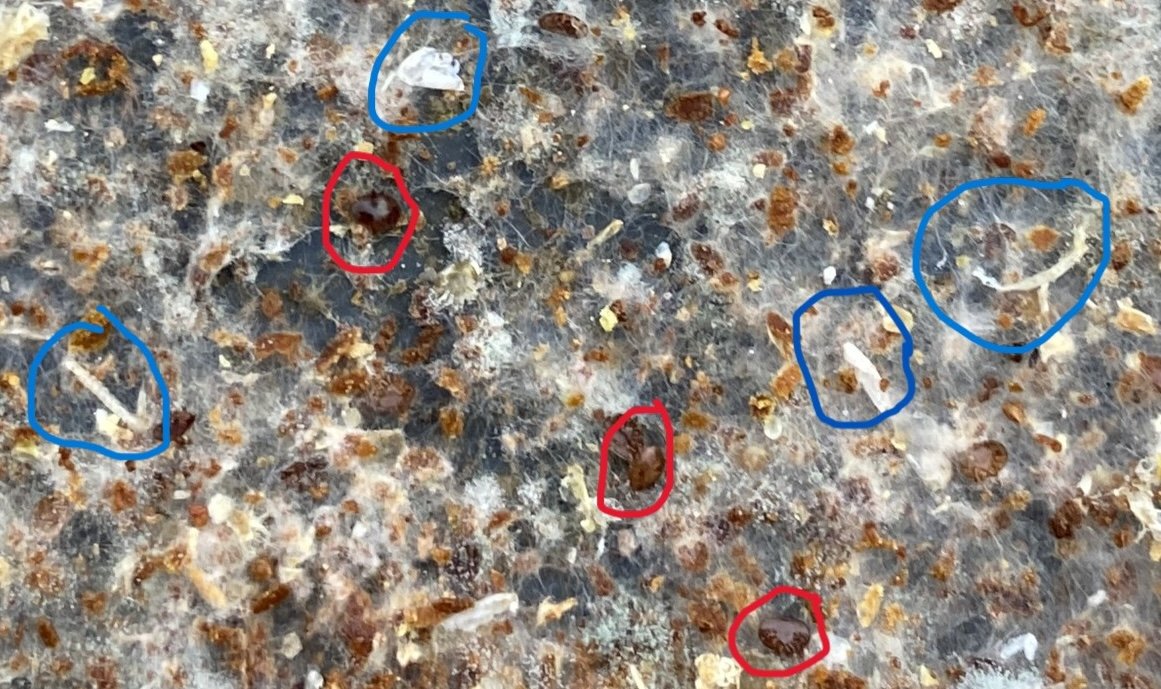
Checking the insert trays on those colonies now, the mite drop is higher than in my long-term varroa resistant colonies (currently dropping fewer than 1 a day), but at between 3.4 and 4.6 a day over the last three weeks, I am very positive. This is a low mite count for the time of year. Amongst the debris were pupal parts - the tell-tale sign that infected pupae are still being chewed out. These previously varroa naïve colonies are now waging war on the mites led by varroa resistant queen line.
If you’re unsure what constitutes a low or high mite count, you can put your mite count over a set number of days into the calculator at https://www.varroaresistant.uk/mite-calculator/.
Next month, we’ll look at further observations from the insert trays as winter properly kicks in, and I’ll talk about how I’ll be selecting which colonies to breed from next season after reviewing the data from the whole of 2025 and comparing it with previous years.
Key for me will be looking for colonies to end 2025 with an average daily mite drop that is the same or lower than at the start of the year.
Varroa resistant summary for November:
-
Insert boards and trays are now the beekeeper’s essential tool for monitoring varroa resistance over winter. You’ll be able to do average daily mite drop counts throughout the cold period, while pupal parts will evidence chewing out during periods where there is brood.
-
Varroa mite counts should now be low and falling as the ivy flow ebbs and queen go off lay once more.
-
Winter jobs include continuing to record your average daily mite drop and observations of pupal exoskeletons every time you go to check and heft hives.
Every month through the season, we will publish an article detailing what’s going on in varroa resistant apiaries, explaining our observations, to help those who may be starting their varroa resistant journey. The first article was published in the February edition of BIBBA Monthly.

Lessons from New Research NOVEMBER 2025
Summary
A 2025 study in Apidologie by Parenzan et al. reveals that Varroa destructor mites can survive far longer on honey-bee larvae than previously believed — typically 45-50 days but up to 100 days has been observed. The findings reshape how we think about brood breaks, frame transfers, and quarantine in Varroa resistant beekeeping.
A Closer Look at Mite Longevity
Parenzan and colleagues measured Varroa survival on larvae, pupae and adult bees under controlled conditions. The results were striking: mites lived longest on larvae, with a median lifespan of around 45 days and occasional survival up to three months. Survival was shorter on pupae and adults. Mite longevity also declined later in summer, possibly because higher viral loads and poorer host health reduced feeding success.
“Larvae provide a long-term refuge for mites — a challenge for every breeding and management programme.”
Why It Matters to Breeders and Beekeepers
This extended survival shows that larvae act as a safe harbour for mites. Any manipulation that leaves plenty of larvae available — such as leaving colonies queenless, transferring larval frames, or incomplete brood breaks.
For BIBBA members aiming to produce locally adapted, treatment-reduced bees, understanding this biology helps refine practical management.
Putting the Findings into Practice
- Frame Transfers and Queen Rearing
Avoid moving frames with young larvae from high-mite colonies into breeder or mating units. When grafting, use donor colonies with the lowest mite counts, clean grafting tools, and keep grafted frames isolated until queens are laying. - Brood Breaks and Splits
A brood break must last until all the brood has emerged, including drones. This could be as long as 24 days so be vigilant. Leaving even a few larvae gives mites a refuge. Plan splits or artificial swarms so that no fresh larvae remain in either half of the operation. - Quarantine for New Stock
Because mites can survive on larvae for many weeks, short quarantines are inadequate. When introducing nucs or packages, isolate and monitor for 6–8 weeks. Perform sugar-roll or alcohol-wash counts and treat if mite levels exceed thresholds. - Keep Colonies Healthy
The study also showed mite survival falls when bee health declines. Good nutrition, low stress, and selection for Varroa resistant traits all help reduce mite success.
The Take-Home Message from the paper
Varroa mites can persist on larvae far longer than expected — sometimes for months. This explains why colonies often rebound quickly after short brood breaks or frame transfers. Breeders and practical beekeepers can use this knowledge to tighten brood management, strengthen quarantine, and refine selection for brood-based resistance.
Building on such scientific insights brings us one step closer to robust, regionally adapted bees capable of thriving with minimal treatment — the very goal at the heart of BIBBA’s philosophy.
And, very finally, a word of caution
It’s not always prudent to base your beekeeping practices on the outcome of a single piece of scientific analysis. In this case, extended and complete brood breaks may stress the bees unnecessarily and possibly distort your understanding of any natural Varroa resistant traits within the colony.
.
These will be a new series of articles. If you read the scientific paper and have anything to add, please email us at and we will update this article.
If you want to be part of the Scientific and Technical Working Group, please drop us a line at . We are aiming to review an average of around one scientific paper per month to see what can be drawn from it for BIBBA members. Mostly done by email.
Sustainable Honey Bee Breeding: A Scientific Guide for Future Beekeeping
Cecilia Costa, Marina Meixner, Norman Carreck, Aleksandar Uzunov & Ralph Büchler (Eds.) Springer Nature, 2024

"Sustainable Honey Bee Breeding confirms that the future of apiculture will not be built on imports or chemical dependency, but on patient, locally focused selection.
For BIBBA readers, it feels less like a new idea than a vindication of everything the Association has stood for since its founding - working with nature to create stronger, self-sustaining bees."
This new volume represents a major milestone in the movement toward locally adapted and resilient bees. Drawing together over 30 contributors from 16 countries within the COLOSS network, it unites two decades of collaborative science into a practical, forward-looking guide for modern apiculture.
The book’s central argument will sound familiar to BIBBA members: that sustainability begins with local adaptation. The editors show, with convincing data and field examples, that honey bee populations shaped by their regional environment are more resilient, productive and harmonious than imported stock. Early COLOSS studies into overwintering losses revealed “bee origin” as a decisive factor - colonies of local lineage consistently survived better. The message is clear: the future of beekeeping lies in improving what is already well adapted to our own conditions.
The first section tells the story of Apis mellifera’s evolution and its long relationship with humans. It explains how diverse ecotypes across Europe co-evolved with their environments, and how that diversity forms the genetic foundation for today’s breeding work. The book goes on to highlight free-living populations - unmanaged colonies that continue to survive Varroa without chemical treatment. These bees, often found in forests or rural landscapes, demonstrate that natural selection can still operate effectively. Their example challenges breeders to align human selection with natural adaptation rather than working against it.
One of the most valuable parts of the book is its clear discussion of Varroa resistance. The editors summarise research into traits such as hygienic uncapping, recapping, suppressed mite reproduction and grooming behaviour. They stress that resistance is not a single trait but a cluster of adaptive behaviours best understood (and selected for) within the local context. Their conclusion could easily serve as a BIBBA motto: resistance cannot be imported; it must be bred locally.
The second half of the book turns to practical breeding methods - performance testing, data recording, economic considerations, and above all, queen rearing. These chapters are an invaluable reference for any bee improvement group. They describe workable systems for small and large-scale operations alike, with sound guidance on maintaining genetic diversity and controlling mating. Collaboration is emphasised throughout: breeding, the authors remind us, is not a solo pursuit but a cooperative enterprise - a principle long upheld by BIBBA.
Accessible yet rigorous, the book bridges science and practice beautifully. Its blend of research, field experience and case studies makes it suitable for both professional and amateur breeders.
20% off discount coupon review by Karl Colyer
The Role of Bee Products in Preventing and Healing Respiratory Viral Infections
Exploring scientific evidence and natural strategies for better immunity and lung health
The European Beekeeping Association (EBA) is pleased to announce an upcoming webinar focused on the vital link between bee products and respiratory health. The event will highlight scientific evidence and natural approaches that support the immune system and promote recovery from respiratory viral infections.
Speaker
Dr. Zorica Plavsic, MD, PhD, MPH
Apitherapist, Member of the EBA Scientific Committee on Apitherapy (Serbia), President and Founder of the First International Medical Society for Apitherapy Serbia – ApiMed.
Dr. Plavsic will present the latest research and clinical applications of bee products such as honey, propolis, royal jelly and bee pollen in strengthening immunity and improving lung health.
This webinar is part of EBAs continuing effort to promote scientific knowledge and raise awareness about the benefits of apitherapy and the essential role of bees in human health and well-being.
Participation is free of charge.
Access the webinar here:
Click to join the webinar on Microsoft Teams