Copy of test
Red Listed
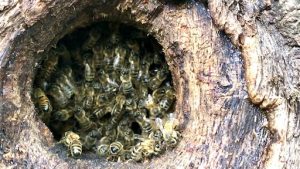
Wild Western Honey Bees (Apis mellifera) are now classified as Endangered in much of Europe, including southeast England, according to the IUCN Red List of Threatened Species.
Free-living colonies face severe threats from habitat loss, pesticides, invasive species like Varroa mites and Asian hornets, and genetic impacts from modern beekeeping.
Key survival depends on natural nesting sites and diverse foraging habitats, including urban areas.
Conservation efforts highlighted by the Red List include:
- protecting habitats
- controlling invasive predators and parasites
- promoting native bee subspecies,
- avoiding non-native genotype introductions
- expanding research
Without action, Europe’s wild honey bees — vital pollinators — face further decline.
Honey bees, with only one species, that are those that beekeepers keep. There is a lot more to know about them than is usually given in books and training courses. It isn’t often appreciated that some bees suit the locality better than others, need less feeding, are resistant to varroa and above all are survivors. These are important issues that will help the understanding of why some beekeepers have robust bees, while others have heavy losses. We have assembled more information that can be found here. (link to next page)
- Bumblebees, of which there are 24 species. Some are surviving well, though others are declining. Some are species-specific, so may not be widely distributed. The Tree Bumblebee (Bombus hypnorum) is likely to be the species that beekeepers are contacted about if a nest is found in a bird box. The Bumblebee Conservation Trust website is a good resource.
- Solitary bees make up the remainder of the species. Unlike honey bees and bumblebees, there are only males and females, with no adults living through the winter. Some are species-specific, hence short life span. Some, such as the ivy bee (Colletes hedera) can look like and be confused with honey bees, but are smaller. Some online material is of dubious quality, but the website of the Bees, Wasps and Ants Recording Society (BWARS) is sound.