Varroa Resistant Colonies
VR behaviour during and after the main flow
The main flow has ended abruptly in the southeast of England - hedgerows are full of immature blackberries and the white clover is also all but over. With not a lot of borage in this area, my bees are now on Himalayan Balsam, with the purple pollen of Rosebay Willowherb in evidence on insert boards. Will the ivy flow also come early this year? It could be a long month and a half.
Talking of insert boards, the daily varroa mite drop counts from my best varroa resistant colonies are once again fewer than one a day, having ticked up slightly as the remaining brood hatched while they were re-queening last month.

These colonies are in an apiary where all the colonies are varroa resistant and the daily drop numbers across the apiary have been low all season, my hive record cards showing one mite a day at most (during re-queening) and fewer than one a day for the majority of the time. I am really pleased with this, but not complacent and will continue to monitor and record the data to ensure it stays this way.
I am expecting to see a spike in the daily drop numbers in August and September, and that spike may start early this year. My locally adapted queens have already started to slow laying in response to the end of the flow, meaning bee numbers will start falling. As the brood nest and the wider colony contracts, then we should see a lot more varroa dropping out of colonies.
This spike can be perturbing when you first see it, but don’t panic because it is a seasonal pattern and related to the shrinkage in the colony. Daily drop numbers should fall back to where they started by October. I will document it and show it in pictures as it happens.
There was also less evidence of uncapping and chewing out during the main flow as the bees focused on processing the incoming nectar, but I am again seeing the tell-tale signs of uncapped worker brood cells and exoskeleton parts appearing on insert boards.
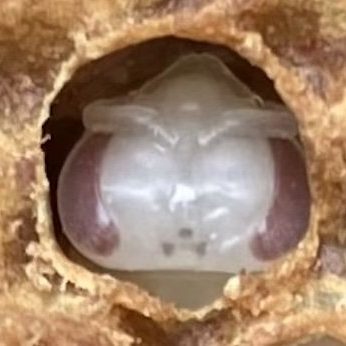
In the picture on the left you can clearly see three partially chewed out pupae in the patch of uncapped cells with pupae at the pink/purple-eyed stage.
Remember that in the melee of the hive with its constant air flows, bees find it hard to pinpoint the exact cell with an infected pupae and tend to uncap a patch of cells until they find the one they’re looking for. In this case they found three next to each other. Unaffected pupae will be recapped so they can complete their development.
Here’s another partially chewed out pupae that I subsequently watched the bees remove from its cell.

My focus now has turned to the colonies that I have requeened over the spring and summer with varroa resistant queen lines.
As I showed last month, these colonies have started to uncap cells and chew out pupae as the new queen’s progeny have become prevalent. The previous slabs of brood are now peppered with uncapped or empty cells.
But mite drop counts remain high at above 10 a day. It is now a case of monitoring for a whole season to see whether the colony can bring them under control. Certainly, by spring I should have a much clearer picture of the way things are headed.
Varroa resistant summary for July:
- Uncapping and chewing out was less evident during the main flow as bees focused on processing nectar but is now picking up again as the flow is over.
- Daily mite drop numbers are fewer than one a day in my best colonies, compared with over 10 a day in previous mite breeding colonies that have now been requeened with queens from varroa resistant queen lines.
- There is likely to be a spike in daily mite drop numbers in all the colonies as the whole colony starts to contract going into winter. This spike, normally seen in August and September, may start early this season.
Every month through the season, we will publish an article detailing what’s going on in varroa resistant apiaries, explaining our observations, to help those who may be starting their varroa resistant journey.