Varroa Resistant Colonies
The heritability of varroa resistant traits
Conditions for queen raising have been ideal in the southeast of England so far this year, with lots of pollen and nectar in the hives to produce copious Royal Jelly, drones in abundance and long spells of good weather for virgin queens to get out and well mated.
That’s allowed me to get ahead of my initial queen breeding plan for this year, and I am increasing stocks from my best varroa resistant colonies as well as re-queening my mite breeding colonies – those that couldn’t survive without my intervention to control varroa.
Nearly all these new queens have come from naturally-produced swarm cells – I harvest all but one and hatch the other queens in an incubator before introducing them to two- or three-frame nucs or mini-mating nucs for mating.
I am always a little apprehensive as to whether the colonies headed by my new daughter queens will show the same level of varroa resistance as the mother colony. The team at varroaresistant.uk have shown that varroa resistance is transmitted via the queens and that there’s a strong heritability down queen lines, so the scientific evidence is building.
But in an open mating situation where queens are likely to mate with drones from mite-breeding colonies, could the genetics be diluted or even switched off for subsequent generations? It’s why I am so keen on flooding the area around queen mating apiaries with drones from varroa resistant colonies and why it’s beneficial to work with other local beekeepers so they are hopefully doing the same too.
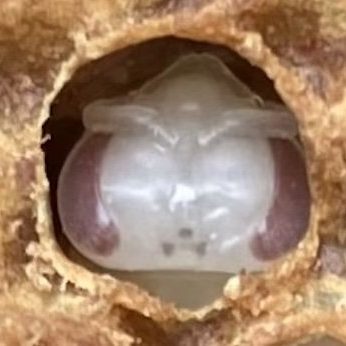

So far, my own observations support the science. All the daughter queen colonies are starting to uncap cells and chew out infected pupae. Whether they are as effective as the mothers will only become clear over the course of a season, and so I will be regularly recording observations of uncapping, chewing out (as evidenced by exoskeleton parts of the insert board) and daily mite drop counts for the new colony as I do for the mother colonies.
I have learnt to be patient to observe the first uncapping in colonies headed by the new queens as this may not become evident until the new queen’s second brood cycle. Initial frames of capped worker brood show little signs of uncapping, even during the June gap where colonies can be focusing on hygiene rather than processing incoming nectar
My mating nucs have a lot of fresh and clean comb of course. And if queens are introduced to established hives, then it will take time for her offspring to become the dominant force of workers In the hive. But by the second brood cycle, the uncapping and chewing out re-starts, in every case so far.

In terms of mite counts over the past month, my best colonies have a daily mite drop of fewer than one a day, others around two to three a day. When I have done an artificial swarm split, the re-queening hive shows a slight uptick in drop - to one or two a day in the best colonies and up to five a day in others - as the last of the old queen’s brood hatches and the mites have nowhere to go. Then the mite counts fall and I see virtually no mites on the insert board until the new queen’s first cycle of brood starts to hatch.
The main flow is now starting in my apiaries, with nectar starting to drip from frames as you turn to inspect them. That could prompt a lower level of uncapping and chewing out as the bees focus on processing the incoming nectar. I’ll report my observations in next month’s report.
Varroa resistant summary for June:
- Daughter queens from varroa resistant stock show strong heritability of the varroa resistant genes despite open mating.
- You may have to wait until the second brood cycle to see uncapping and chewing out in colonies headed by newly mated queens from varroa resistant stock.
- There may be an increase in mite drop numbers going into a brood break caused by a split or swarm, but this quickly fades as the colony re-queens. It’s important to continue doing a mite drop count even though you may not be inspecting while the new queen emerges and gets mated.
- Encourage drone proliferation in your varroa resistant colonies to flood the area with your drones carrying the right genetics
Every month through the season, we will publish an article detailing what’s going on in varroa resistant apiaries, explaining our observations, to help those who may be starting their varroa resistant journey.