Research
Tolerance to Varroa destructor in Ireland
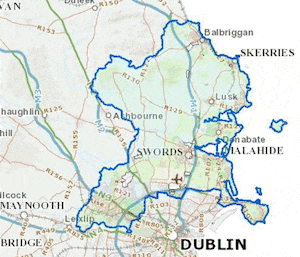
In North County Dublin, Ireland, a region that has a relatively self-contained beekeeping regime with little movement of colonies or queens into the area, tolerance (co-adaptation) to varroa mites is becoming established.
Read MoreEstimating C-lineage Introgression
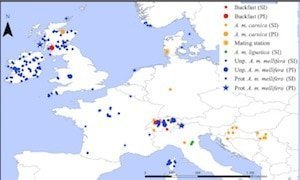
Conservation efforts for A. m. mellifera are underway in multiple European
countries requiring reliable and cost-efficient molecular tools to identify purebred colonies. Here, we developed four ancestry-informative SNP assays for high sample throughput genotyping using the iPLEX Mass Array system.
Is the Dark Bee Really Native to Britain and Ireland?
This article by Dorian Pritchard was originally published in BIM 30 Winter 2008
Read MoreBreeding for resistance to Varroa destructor in Europe
The rich variety of native honeybee subspecies and ecotypes in Europe offers a good genetic resource for selection towards Varroa resistance.
Read MoreWork with Bangor University
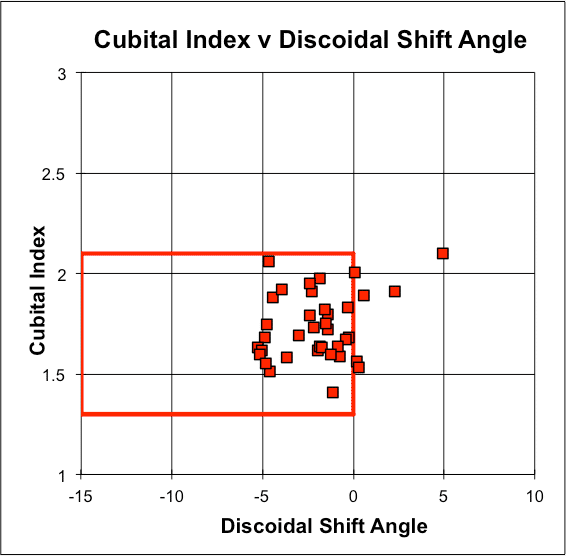
North Wales BIBBA groups have teamed up with South Clwyd Beekeepers and Bangor University.
The first study by Bangor concerned a survey of bee wings throughout South Clwyd. The wings were analysed using DrawWing and Morphplot. The samples were collected by BIBBA breeding groups and members of SCBKA and then tested by a number of BIBBA queen rearers and the Bangor researcher Elise Keller.
New Approach to the Mitotype Classification
The main problem of the black honeybee in Russia and European countries is the preservation of the indigenous gene pool purity; A new approach to the classification of the honeybee M mitotypes was suggested.
Read MoreNeonicotinoids and Bumblebees
Professor Dave Goulson – Bees, Pesticide and Politics: the impact of neonicotinoids on UK bumblebees
Read MoreThe health and status of the feral honeybee population of the UK
abstract of thesis Catherine Eleanor Thompson:
While declines in managed honeybee colonies are well documented, little is known about the health and status of feral honeybee populations. To date no studies have considered the wider pathogen burden in feral colonies, whether they represent a genetically distinct population, a remnant native population or a unique source of genetic resistance.
Read MoreCaging Virgin Queens
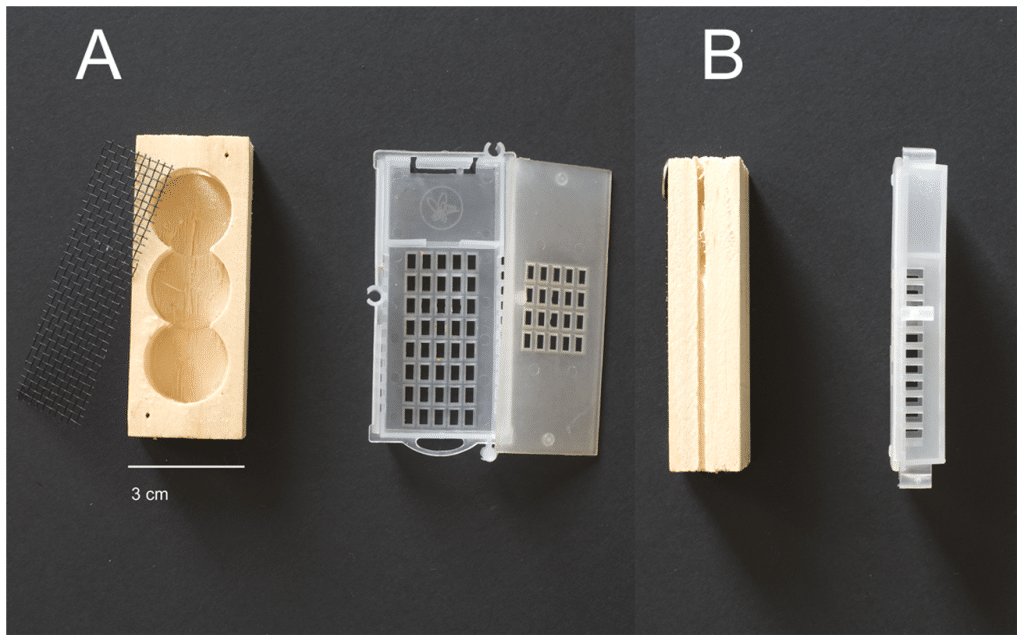
Comparing Alternative Methods for Holding Virgin Honey Bee Queens for One Week in Mailing Cages before Mating
Read MoreControlled Mating and Hygienic Behaviour
we compared the levels of hygiene in colonies headed by daughter queens reared from hygienic mother colonies that were either instrumentally inseminated with sperm from drones reared from hygienic colonies or allowed to mate naturally with naturally-occurring drones.
Read More